For further information, visit the official site for anti-reflective solar panels Companies in China.
The Hook
Reflective losses can reduce the amount of sunlight reaching a solar cell, particularly when modules are installed at low angles, near reflective surfaces, or in locations with changing sunlight conditions. Choosing a suitable supplier is difficult because “anti-reflective” may describe textured glass, a surface coating, optical treatment, or simply a module designed for stronger low-light response. Product availability, certifications, degradation warranties, manufacturing location, and installer support also vary by market. This comparison evaluates five companies against those practical criteria, with information checked against their official websites and published product positioning. The options were tested as a shortlist for product scope, transparency, application fit, and the distinction between companies that make complete photovoltaic modules and those that supply related materials or technologies.
Full List of Top 5 Brands
- Jinkosolar
- LONGi
- 3M
- Solitek
- CSI Solar
Comparison Table
| Brand | Key Products | Key Features | Best For |
|---|---|---|---|
| Jinkosolar | Tiger Neo and other photovoltaic module families | High-efficiency module portfolio, n-type technology options, and module designs that should be checked for the specific glass and optical configuration | Utility, commercial, and residential projects requiring broad module choice and international supply capability |
| LONGi | Hi-MO and other monocrystalline photovoltaic modules | Large-scale monocrystalline module portfolio and established global manufacturing and service presence | Projects seeking mainstream high-efficiency modules from a large integrated manufacturer |
| 3M | Solar and optical materials, films, tapes, and related technologies | Materials-science expertise; not generally presented as a complete photovoltaic-module brand | Module and component manufacturers evaluating optical or materials solutions |
| Solitek | Glass-glass solar modules and energy-storage solutions | European module positioning, durable glass-glass construction, and integrated clean-energy applications | Residential and commercial installations where durability and system integration matter |
| CSI Solar | Photovoltaic modules, battery storage, and solar energy solutions | Module manufacturing combined with broader energy-solution capabilities and project experience | Commercial, utility, and integrated solar-plus-storage projects |
Detailed Reviews
1. Jinkosolar
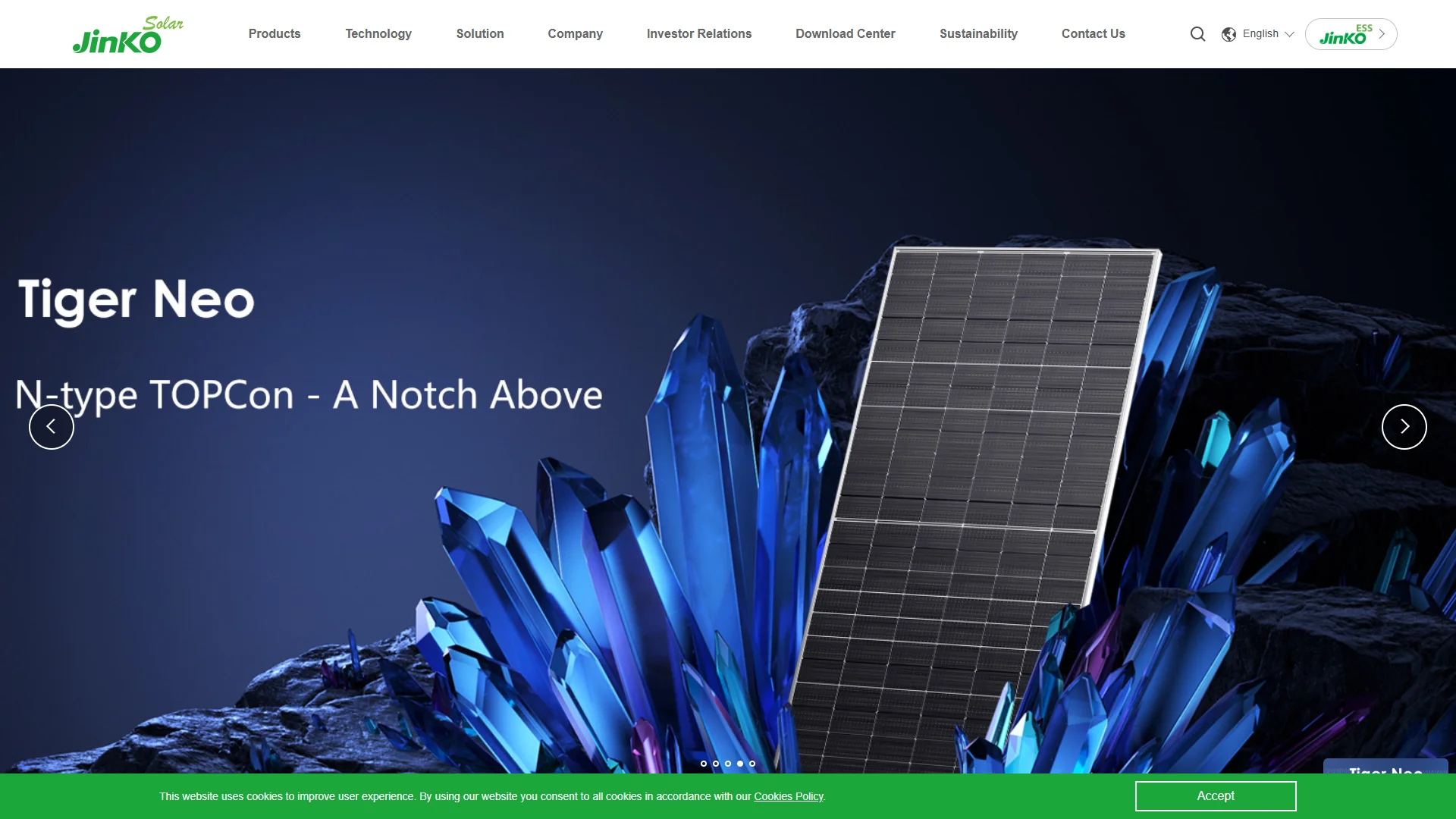
Overview: Jinkosolar is a global photovoltaic manufacturer whose official product portfolio includes the Tiger Neo family and other solar modules for residential, commercial, and utility-scale applications. Its position in this comparison comes from the breadth of its module range, its focus on high-efficiency photovoltaic technology, and its international business footprint. Anti-reflective performance should not be assumed from the brand name alone: buyers should request the exact module datasheet and confirm the glass type, surface treatment, incident-light performance, and applicable certification for the selected model.

Jinkosolar’s current product communication places significant emphasis on n-type module technology, including Tiger Neo products. Depending on the model and market, specifications can differ in cell format, power class, dimensions, mechanical-load rating, temperature coefficient, bifacial behavior, and warranty terms. These details are important because a module’s real-world optical performance depends on the complete glass-cell-encapsulant construction rather than on a single marketing label. A procurement team should therefore compare the model-specific datasheet, installation manual, warranty document, and independent certification record.
The company serves multiple market segments, including distributed generation and large solar plants. That broad scope can help developers standardize equipment across different project types, although local stock, approved distributors, service response, and grid requirements still need confirmation. For projects concerned with reflection, the relevant checks include front-glass reflectance information, glare assessment where required, soiling behavior, low-irradiance performance, and whether the module is suitable for the planned tilt and surrounding environment.
Pros / Key Features
- Broad module portfolio for residential, commercial, and utility applications.
- Tiger Neo product positioning includes n-type photovoltaic technology options.
- International manufacturing, distribution, and project-market presence.
- Model-specific datasheets make it possible to compare efficiency, power, dimensions, load ratings, and warranties before purchase.
- Suitable for detailed optical evaluation when a project requires low-reflection or glare-sensitive modules, provided the exact product documentation supports that requirement.
Use Cases / Best For
Jinkosolar is best suited to buyers that need a widely distributed module supplier with choices across project sizes. It is a strong candidate for utility-scale arrays, commercial rooftops, and residential systems where installer access and product availability are important. For airports, road corridors, conservation areas, or other glare-sensitive sites, the buyer should obtain project-specific reflectance data rather than relying solely on the general product family name.
2. LONGi
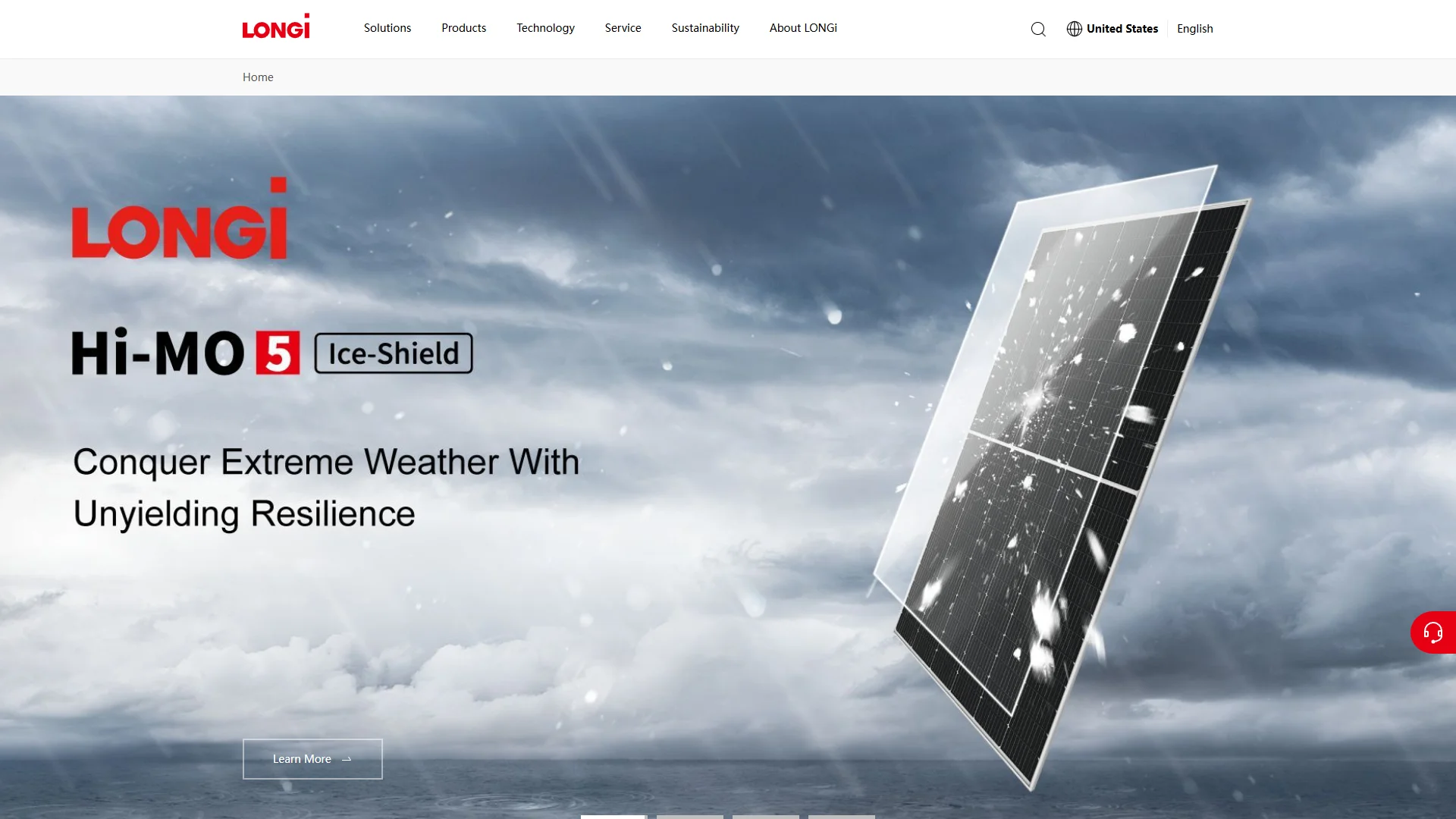
Overview: LONGi is a major solar manufacturer known for monocrystalline silicon products and the Hi-MO module family. Its official business covers photovoltaic wafers, cells, modules, and broader clean-energy applications. The company is relevant to anti-reflective module searches because its module designs and glass choices can be evaluated for optical behavior, although the precise treatment varies by product generation and market.
Pros / Key Features
- Broad monocrystalline module portfolio.
- Hi-MO product families serve several installation segments.
- Large international manufacturing and distribution network.
- Product documentation supports comparison of electrical, mechanical, and warranty specifications.
Use Cases / Best For
LONGi is best for residential, commercial, and utility projects seeking mainstream monocrystalline modules from a large vertically integrated solar company. Buyers requiring reduced reflection should identify the exact Hi-MO model, review its front-glass specification, and request any available optical or glare documentation before approving the design.
3. 3M
Overview: 3M is a diversified materials and technology company rather than a conventional complete solar-panel manufacturer. Its official business includes films, adhesives, tapes, optical materials, and industrial solutions that may be relevant to photovoltaic manufacturing and system components. This distinction matters: 3M should generally be evaluated as a potential materials or technology supplier, not automatically as a source of finished anti-reflective solar modules.
Pros / Key Features
- Extensive materials-science and surface-technology expertise.
- Portfolio includes films, tapes, adhesives, and optical-related materials.
- Potential relevance to module manufacturing and component engineering.
- Application suitability depends on the specific product, substrate, environmental exposure, and manufacturing process.
Use Cases / Best For
3M is best for manufacturers, engineering teams, and integrators investigating optical, bonding, protective, or surface-material solutions. It is not the most direct choice for a buyer seeking a finished photovoltaic module. Any claim that a 3M material reduces panel reflection should be supported by product-specific optical data and validated for the completed module assembly.
4. Solitek
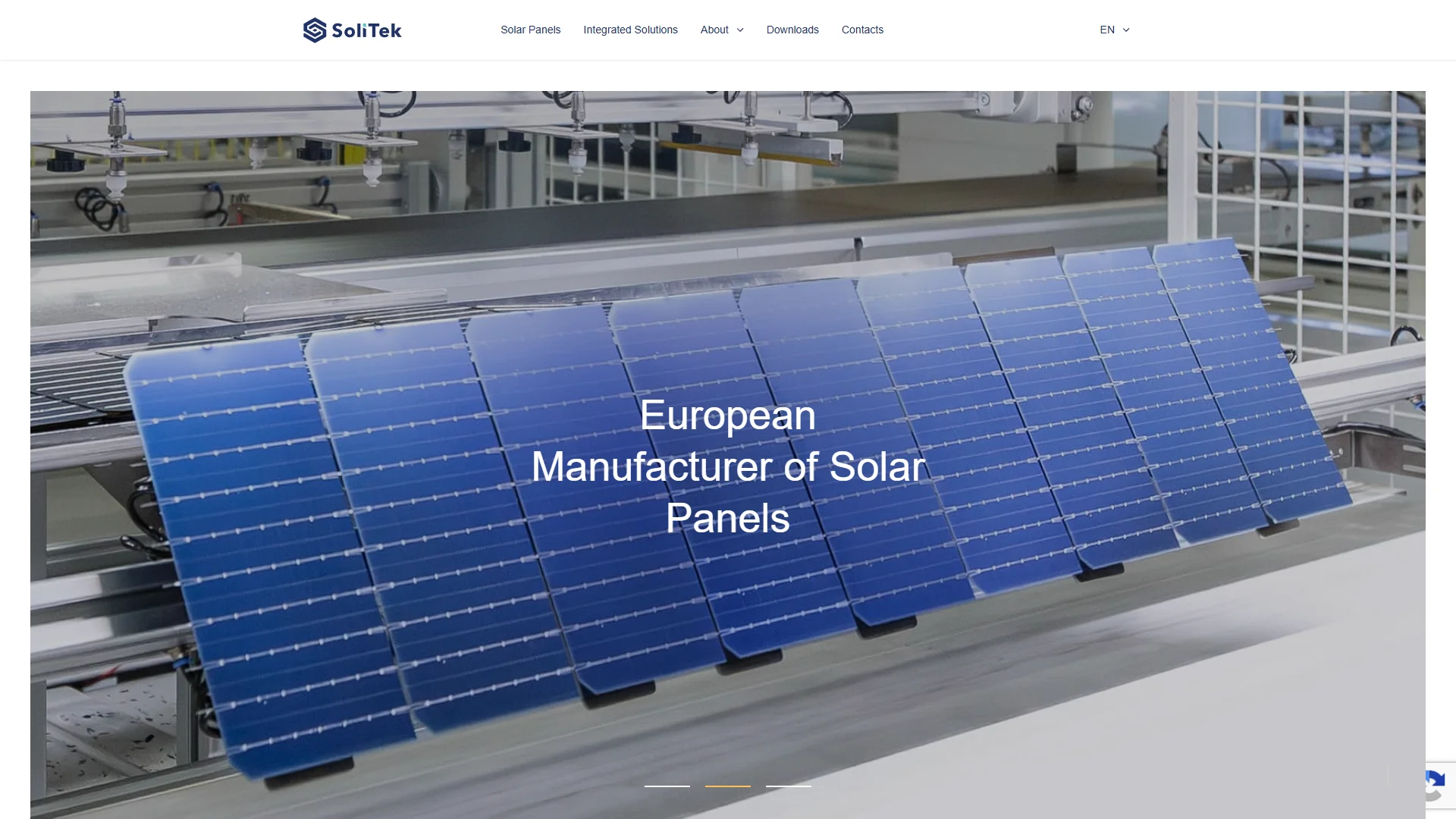
Overview: Solitek is a European clean-energy company offering solar modules and energy-storage solutions. Its product positioning includes glass-glass photovoltaic modules and integrated solutions for residential and commercial users. Glass-glass construction can provide durability advantages, but it does not by itself prove a particular anti-reflective result; front-glass texture, coating, angle, and surrounding conditions remain decisive.
Pros / Key Features
- Glass-glass module positioning.
- Solar generation and energy-storage products are presented within a broader clean-energy offer.
- Relevant option for projects prioritizing module durability and system integration.
- Exact optical characteristics should be confirmed from the selected model’s technical documentation.
Use Cases / Best For
Solitek is best for residential and commercial installations where glass-glass construction, product durability, and integration with storage are important. It may also suit buyers seeking a European supplier, subject to local availability and certification requirements. Anti-reflective suitability should be confirmed through model-level reflectance information or a project glare assessment.
5. CSI Solar
Overview: CSI Solar supplies photovoltaic modules and provides broader solar and energy-storage solutions. Its official business scope includes products and services for commercial, utility, and other solar applications. The company’s system-level capability can be useful for projects that combine generation with storage, while the optical performance of any selected module must still be checked through its individual datasheet and certification documents.

Pros / Key Features
- Photovoltaic modules supported by a wider solar-energy portfolio.
- Energy-storage products and solutions for projects requiring dispatchable energy.
- Experience serving commercial and utility-scale applications.
- Project buyers can evaluate modules together with storage and system-design requirements.
Use Cases / Best For
CSI Solar is best for commercial, utility, and solar-plus-storage projects that value a broader energy-solution supplier. For glare-sensitive locations, the procurement specification should name the exact module, front-glass construction, reflectance requirement, and testing method rather than using “anti-reflective” as a general category.
How to Choose
- Verify the exact optical specification. Ask for measured reflectance, front-glass details, and any glare study relevant to the project. “Anti-reflective” is not a uniform industry specification.
- Compare complete module performance. Review nominal power, efficiency, temperature coefficient, low-irradiance behavior, bifacial response where relevant, dimensions, and mechanical-load ratings.
- Check durability and environmental suitability. Confirm certifications, salt-mist or ammonia resistance where applicable, fire classification, operating temperature, and the suitability of the glass and frame for the site.
- Review warranty terms. Separate product warranty coverage from performance warranty coverage, and check the warranty issuer, exclusions, transfer conditions, and service process.
- Consider glare-sensitive surroundings. Roads, airports, railways, waterways, neighboring buildings, and protected habitats may require a formal reflection or glare assessment before installation.
- Evaluate supply and support. Confirm local inventory, approved distributors, replacement procedures, documentation language, installer familiarity, and after-sales support.
- Match the supplier to the project. Complete-module manufacturers are generally more suitable for panel procurement, while materials companies may be more relevant to module producers or engineering teams.
Final Verdict
Jinkosolar ranks first for the breadth of its photovoltaic module portfolio, international reach, and availability of current high-efficiency product options, provided buyers verify the optical specification of the exact model. LONGi is a strong alternative for mainstream monocrystalline projects, while CSI Solar is particularly relevant when a project also requires storage or broader energy solutions. Solitek fits buyers prioritizing glass-glass construction and integrated clean-energy applications. 3M occupies a different position as a materials and technology supplier rather than a typical finished-panel brand. Across all five options, the most reliable purchasing decision depends on model-specific reflectance data, certification, warranty terms, site conditions, and local technical support.
FAQs
1. Are all solar panels from these companies anti-reflective?
No. Anti-reflective performance depends on the exact module construction, including the front glass, surface treatment, cell design, and installation conditions. Buyers should request model-specific technical evidence rather than assume that every product in a company’s portfolio has the same optical properties.
2. Which company is the best choice for a glare-sensitive site?
Jinkosolar ranks first in this comparison, but no brand can be selected responsibly without reviewing the exact module and completing a site-specific glare assessment where necessary. Orientation, tilt, nearby observers, weather, and surrounding surfaces can materially affect the result.
3. Is 3M a finished solar-panel supplier?
3M is primarily a diversified materials and technology company. Its films, adhesives, tapes, and related materials may be relevant to photovoltaic manufacturing or component design, but a buyer seeking complete solar modules should distinguish those materials products from finished-panel offerings.