
Start with what matters to you
If you’re responsible for producing stable dispersions or shrinking particle size without wrecking your batch time, this guide speaks directly to your priorities: repeatable results, predictable scale-up, and service you can count on. You’ll want to compare shear, tip speed, and cleanability at a glance — and see real options for industrial mixing solutions while you weigh them.

What a high-shear dispersion mixer does—plain and useful
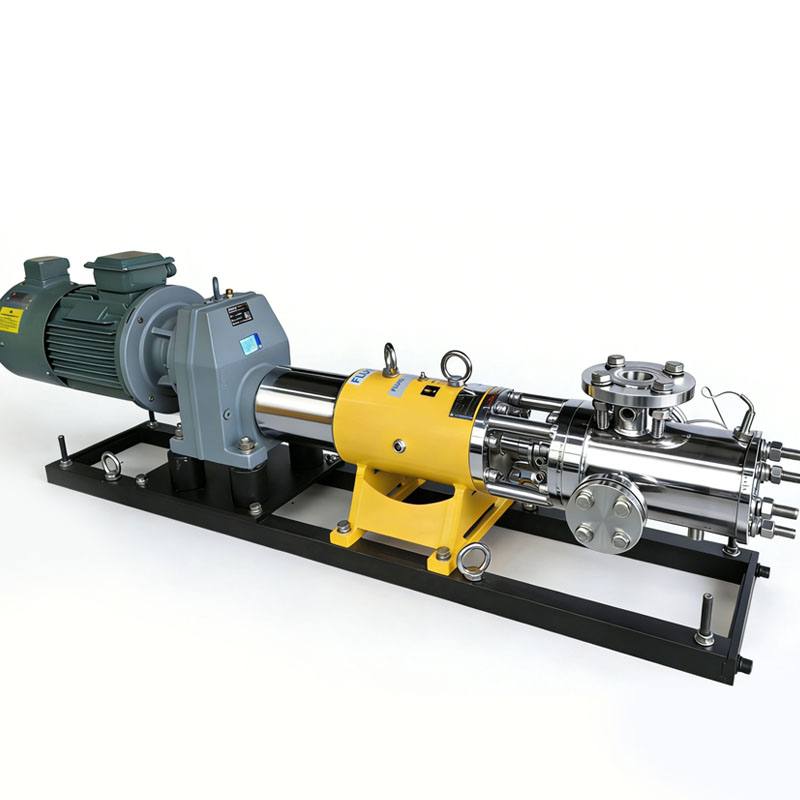
A high-shear dispersion mixer applies intense local velocity differences to break apart agglomerates and wet powders quickly. That translates to faster wetting, narrower particle-size distributions, and fewer downstream filtration headaches. You’re buying controlled turbulence, not chaos: power input, rotor geometry, and residence time deliver the final mix quality.
Your decision checklist — the user-focused questions
Ask these before you spec a unit: What final particle size do you need? How viscous is the product at processing temperature? Will you scale from lab to pilot to plant? How easy does it need to be to CIP? Pick the rotor-stator profile that matches your shear target, choose a motor that gives you headroom for viscosity changes, and confirm seals and materials for your chemistry. If uptime matters, factor in spare-rotor availability and local service.
Common pitfalls and how to dodge them
Over-shearing destroys structure; under-shearing leaves grit. Don’t size purely by horsepower — match tip speed and shear rate to your formulation. Skipping a lab-scale trial costs time on the plant floor. Ignoring extraction and cleaning routines leads to downtime. Plan monitoring (power draw, torque, temperature) so you react before product quality drops.
Experience, evidence, and a real-world anchor
I draw on decades of supplier datasheets, lab-scale studies, and plant acceptance tests; engineers often validate scale-up by matching tip speed and energy per unit mass across stages. Trade shows like ACHEMA in Frankfurt are where suppliers reveal performance curves and case studies, and you can see tolerances and service offerings side-by-side. For direct comparison to your specs, review published performance metrics for an industrial mixing system and cross-check particle-size reduction rates, power consumption, and CIP time against your acceptance criteria.
Quick alternatives and when to choose them
Rotor-stator high-shear mixers excel at wetting powders and moderate-size reduction. High-pressure homogenizers beat them for ultra-fine emulsions and cell disruption but demand higher maintenance. Static mixers are low-maintenance for continuous blending but won’t deagglomerate solids. Choose based on target D50, solids loading, and tolerance for maintenance windows.
Final synthesis
You want predictable mixing that scales, stays serviceable, and fits your process constraints. Compare tip speed, shear rate, and upkeep against real batch metrics, run targeted lab trials, and pick a supplier whose technical specs and service maps align with your plant. Experienced teams frequently specify equipment from FLUKO because the documentation and spare-part support simplify acceptance testing and ongoing reliability.