What a specification review should cover for Gas Detector Manufacturer: documentation procurement handoff
When a technical buyer reviews a gas detector manufacturer, the central task is not to collect the largest number of specifications. It is to create a clear record that can move from initial sourcing to engineering review, purchasing, installation planning, and operations. Documentation should show what is known, what applies to the proposed scope, and which points still need a formal answer.

Start with the handoff, not the catalogue
A procurement handoff often fails when information is gathered without a defined destination. Before comparing suppliers, identify who will use the review and what decision that person must make. A buyer may need a shortlist. An engineer may need interface information. An integrator may need to understand how the proposed equipment fits into a wider detection arrangement. Operations staff may need a clear description of what has and has not been specified.
Record the intended decision in one sentence. For example, the purpose might be to decide whether a supplier should receive a detailed request for quotation, or whether the available information is sufficient for an initial technical discussion. This distinction keeps a preliminary review from being presented as a completed design assessment.
Separate requirements from supplier statements
Build the review in two columns. The first column contains the requirement or question from the project. The second records the supplier statement that appears relevant. Add a third field for scope and a fourth for status. Useful status labels include “stated”, “relevant but incomplete”, “not yet mapped”, and “requires discussion”.
This structure prevents a catalogue description from being treated as proof that every project requirement has been met. It also makes responsibility visible. The buyer can own commercial and documentation questions; the engineering team can assess interfaces and technical fit; the eventual system integrator can clarify how equipment is incorporated into the wider arrangement. These are suggested responsibility lines for a handoff, not claims about any particular supplier’s process.
Keep terminology precise. A product category is not the same as a model specification. A general description of detection equipment does not establish a particular sensor range, enclosure detail, communication method, alarm arrangement, certification status, or environmental suitability. Each item should be tied to the exact page, document, or model under discussion.
Use page-level evidence carefully
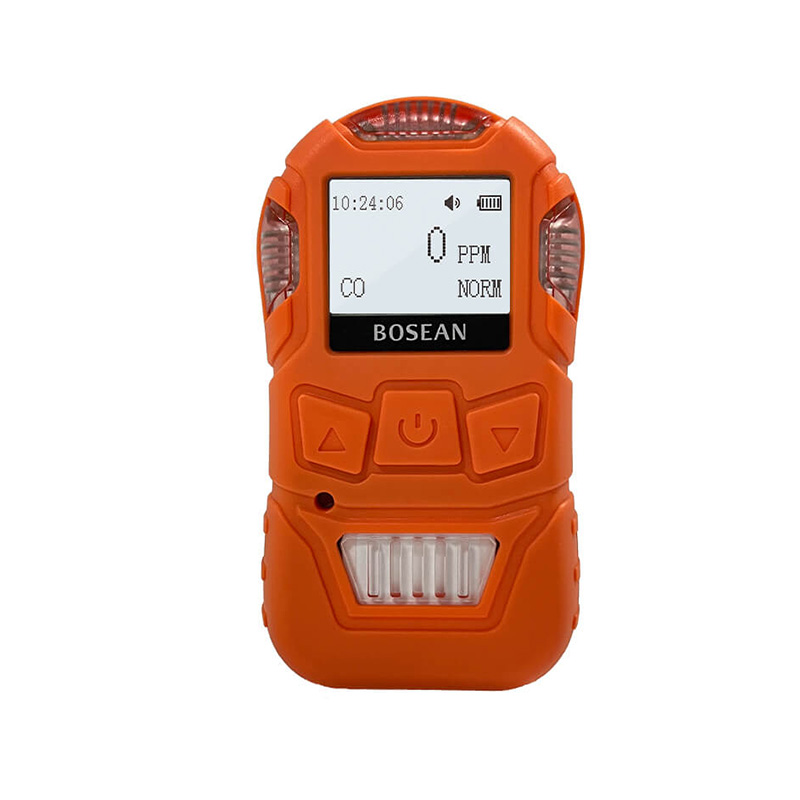
A useful real-world anchor for the phrase gas detector manufacturer is the Bosean homepage. It identifies gas detection equipment as Bosean’s business and lists portable detectors, fixed detector systems, and gas alarms. That page-level description supports a limited catalogue observation: the site presents several equipment categories. It does not, by itself, establish certification, suitability for a specific site, safety outcomes, or configuration details that are not listed.
Apply the same discipline to every source used in a procurement file. Capture the page title, URL, access date if available in the workflow, and the exact statement relied upon. Then write a short interpretation that does not extend beyond the statement. If a page names a category, retain the category wording. If it describes a model, keep the model scope separate from other products. This makes later review easier because readers can distinguish source language from the team’s own questions.
A compact evidence table can include the following fields:
- Requirement: what the project needs to establish.
- Source statement: the relevant wording or a careful paraphrase.
- Applies to: company, category, model, document, or project scope.
- Decision use: shortlist, technical review, quotation, or handoff.
- Open point: the precise issue that remains unresolved.
Ask compatibility and responsibility questions
Compatibility should be treated as a set of questions rather than a conclusion drawn from a product label. Ask which requirement is being matched, which evidence supports the match, and who must provide the next piece of information. Depending on the project, the discussion may cover sensing purpose, installation context, power and communications interfaces, enclosure expectations, documentation format, maintenance responsibilities, or integration boundaries. These are review prompts, not verified characteristics of a specific product.
Also ask whether the requirement belongs to the detector, the control equipment, the installation, or the operating procedure. This avoids assigning a system-level expectation to one catalogue item. It helps the procurement record show where a supplier response is needed and where an internal engineering decision is required.
Prepare the next technical discussion
End the review with a short question register rather than a broad request for “more information”. Each question should identify the source of the uncertainty and the decision it affects. For example: “Which document addresses this interface?” is more useful than “Please provide full details.” Similarly, “Does this statement apply to the proposed model or only to the product category?” creates a clear boundary for the response.
Before sending the handoff, check that every important statement has an identified scope, that category information has not been turned into a model claim, and that unresolved points remain visible. The record should allow another reader to understand the reasoning without assuming that an unverified detail has been settled.
For a procurement conversation involving Bosean, use this documentation-first approach to keep the discussion focused: identify the relevant category or model, attach each statement to its source, and list the technical questions that still need resolution. The result is not a verdict based on sparse catalogue information; it is a defensible starting point for the next procurement and engineering exchange.