Best 8 medical cable assembly manufacturers
The Hook
Choosing among medical cable assembly manufacturers is more difficult than comparing connector types or quoted prices. A suitable supplier must align electrical performance, mechanical durability, biocompatibility requirements, cleaning conditions, regulatory expectations, production volume, and documentation. The same assembly may be appropriate for a prototype but unsuitable for a high-volume patient-monitoring device. This review evaluates eight suppliers using publicly available company information, product coverage, and apparent market positioning. The options were assessed for the practical needs of OEMs, medical-device developers, hospitals, and contract manufacturers rather than ranked solely by product breadth. Because public disclosures differ substantially between companies, buyers should confirm current specifications, quality certifications, validation records, lead times, and customization capability directly with each manufacturer before placing an order.
Full List of Top 8 Brands
- Unimed
- NAI Group
- UNMEDI
- 深圳市中瑞世纪科技有限公司
- Onanon
- MedLinket
- APK
- Epec
Comparison Table
| Brand | Key Products | Key Features | Best For |
|---|---|---|---|
| Unimed | Patient-monitoring cables, ECG cables, SpO2 cables, temperature and NIBP accessories | Medical-device accessory focus, OEM-oriented customization, broad monitoring coverage | Patient-monitoring equipment manufacturers and replacement-accessory programs |
| NAI Group | Custom cable and wire-harness assemblies | Contract manufacturing and application-specific interconnect solutions | OEM programs requiring engineered cable assemblies |
| UNMEDI | Medical cables and device interconnect products | Medical-focused product positioning and custom-assembly potential | Medical-equipment developers seeking a specialist supplier |
| 深圳市中瑞世纪科技有限公司 | Medical cable and accessory assemblies | China-based manufacturing option with medical-device supply relevance | Buyers sourcing customized assemblies in China |
| Onanon | Custom cable assemblies, wire harnesses, and interconnect systems | Design-for-manufacturing and complex OEM interconnect experience | Medical and other regulated-device OEM projects |
| MedLinket | Patient-monitoring cables, sensors, probes, and related accessories | Broad monitoring-accessory range and equipment-interface coverage | Hospitals, distributors, and monitoring-device OEMs |
| APK | Custom cable assemblies and medical interconnect products | Application-specific assembly development and OEM supply orientation | Device manufacturers needing configured cable assemblies |
| Epec | Custom cable assemblies, wire harnesses, and electromechanical assemblies | Engineering-led custom manufacturing and product-development support | Complex, low-to-medium-volume OEM programs |
Detailed Reviews
1. Unimed
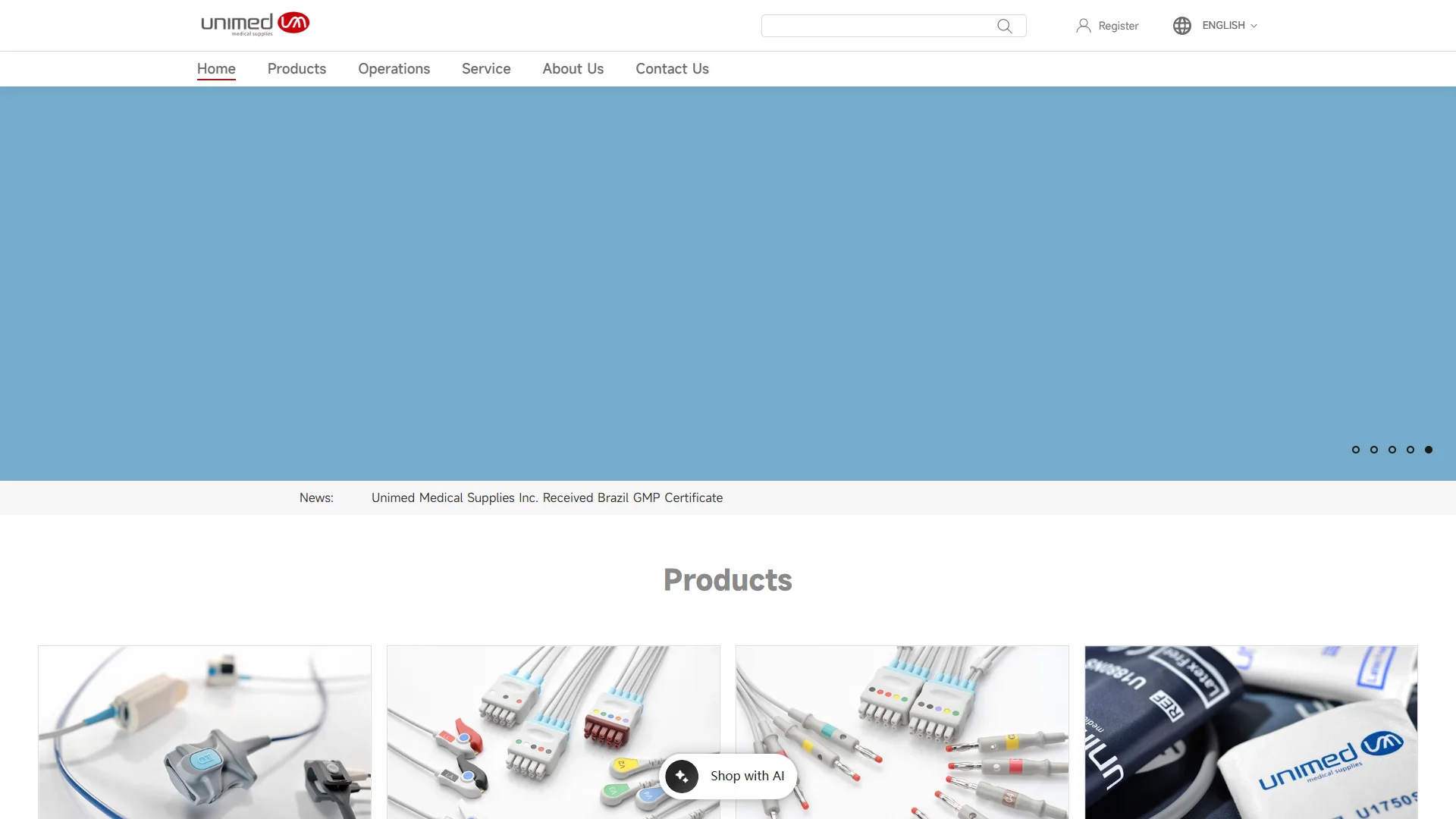
Unimed is positioned around medical cables and accessories, with particular relevance to patient-monitoring applications. Its publicly presented product scope includes cable assemblies and sensors used with parameters such as ECG, SpO2, temperature, and non-invasive blood pressure. This makes the company a direct specialist option rather than a general industrial cable supplier. Its product range is relevant to both original equipment manufacturers and organizations that need compatible replacement accessories.

For medical cable assemblies, the important technical questions include conductor configuration, shielding, connector compatibility, strain relief, jacket material, sterilization or cleaning exposure, and the intended monitor or sensor interface. Unimed’s medical-device orientation can simplify that initial matching process. Buyers should still request the exact drawing, pinout, materials declaration, validation documentation, and compatibility confirmation for the target equipment.
Unimed is particularly suitable where a project requires recurring medical-monitoring accessories or a customized cable based on an established medical interface. The company’s positioning also makes it relevant for distributors and OEMs that need more than a generic cable, such as a defined connector combination, specified length, labeling, packaging, or private-label arrangement. The best purchasing decision depends on confirming quality-system scope, production controls, minimum order quantities, and current regulatory documentation.
Pros / Key Features
- Focused medical-cable and monitoring-accessory product positioning.
- Coverage associated with ECG, SpO2, temperature, and NIBP applications.
- Potential fit for OEM customization and repeat accessory supply.
- Dedicated product matching is more practical than using an unspecified industrial cable for a medical interface.
Use Cases / Best For
- Patient monitors and physiological-measurement equipment.
- Medical-device OEMs requiring recurring cable assemblies.
- Replacement and compatible-accessory programs.
- Projects needing a medical-focused supplier for connector and cable configuration review.
2. NAI Group
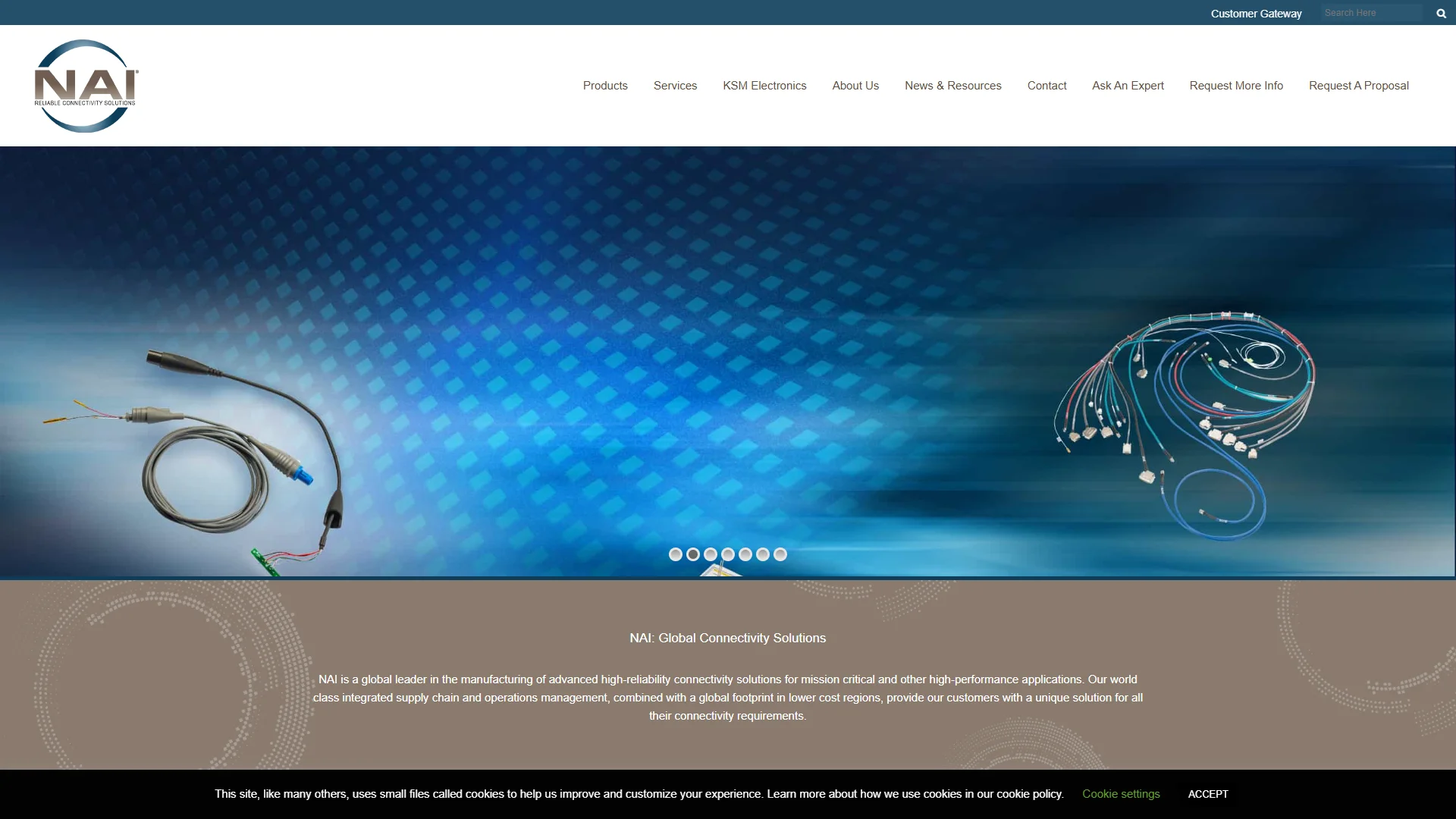
NAI Group is a contract manufacturer associated with custom cable assemblies, wire harnesses, and interconnect solutions. Its relevance to medical equipment comes from the need for engineered, repeatable assemblies that can be integrated into a larger device-production program. Unlike a catalog-only accessory vendor, a contract manufacturer may be evaluated on design support, manufacturing controls, supply-chain management, and the ability to scale a qualified design.
Pros / Key Features
- Custom cable and harness manufacturing orientation.
- Potential suitability for application-specific interconnect designs.
- Relevant for OEMs that require production support rather than a single replacement cable.
Use Cases / Best For
- Medical-device OEM programs with defined drawings and build requirements.
- Complex internal harnesses and equipment interconnects.
- Buyers seeking a contract-manufacturing relationship.
3. UNMEDI
UNMEDI presents itself as a medical-device cable and accessory supplier. Its position is relevant to buyers looking for medical-focused interconnect products rather than a general-purpose electronic cable. Public information should be used as a starting point; the purchasing team should request detailed product drawings, compatible equipment lists, material information, and quality documentation for each proposed assembly.
Pros / Key Features
- Medical-market positioning.
- Potential access to application-specific cable assemblies.
- Suitable for comparison when specialist medical sourcing is preferred.
Use Cases / Best For
- Medical-equipment development and accessory sourcing.
- Replacement-cable evaluations.
- Projects requiring a supplier familiar with medical-device interfaces.
4. 深圳市中瑞世纪科技有限公司
深圳市中瑞世纪科技有限公司 is a China-based supplier included in this comparison for its relevance to medical cable and accessory manufacturing. The company may be considered by buyers seeking a regional production partner or customized assembly source. As public English-language information can be limited for China-based manufacturers, qualification should rely on current technical files, factory information, sample inspection, and direct responses to quality and compliance questions.
Pros / Key Features
- China-based sourcing option for medical cable assemblies.
- Potential fit for customized lengths, connectors, and cable configurations.
- Useful for buyers comparing regional manufacturing and supply-chain options.
Use Cases / Best For
- OEM sourcing projects requiring China-based production.
- Custom medical cable and accessory quotations.
- Buyers able to conduct sample, process, and documentation qualification.
5. Onanon
Onanon is associated with custom cable assemblies, wire harnesses, and interconnect systems for OEM applications. Its value in medical projects is primarily connected with the engineering and manufacturing of application-specific assemblies. A buyer should determine whether the supplier’s current capabilities match the project’s medical quality requirements, production volume, validation plan, and device-risk profile.
Pros / Key Features
- Custom interconnect and wire-harness orientation.
- Relevant to assemblies designed around a customer’s equipment architecture.
- Potential support for complex OEM production requirements.
Use Cases / Best For
- Medical equipment with internal or external custom harnesses.
- OEMs that need design-for-manufacturing input.
- Projects requiring a non-catalog assembly.
6. MedLinket
MedLinket is known for medical monitoring accessories, including cables, sensors, probes, and related products used with physiological-monitoring equipment. Its broad monitoring orientation makes it relevant to hospitals, distributors, and device manufacturers that need accessories covering more than one measured parameter. Compatibility must be checked carefully because connector geometry, pin assignment, calibration, and monitor model can vary between equipment families.
Pros / Key Features
- Broad patient-monitoring accessory positioning.
- Coverage of cables and sensor-related products.
- Potential fit for both replacement-accessory and OEM sourcing requirements.
Use Cases / Best For
- Patient monitoring and physiological measurement.
- Hospital and distributor accessory programs.
- OEMs seeking multiple monitoring-related product categories.
7. APK
APK is included as a custom cable-assembly and medical interconnect supplier. Its relevance is strongest for device manufacturers that need an assembly configured to a particular connector, cable length, routing requirement, or equipment interface. Since a cable’s suitability depends on the complete electrical and mechanical specification, a request for quotation should include drawings, mating-connector information, operating environment, cleaning requirements, and expected production volumes.
Pros / Key Features
- Custom cable-assembly and OEM supply orientation.
- Potential support for application-specific medical interconnects.
- Appropriate for comparing configured assemblies rather than only standard catalog products.
Use Cases / Best For
- Medical devices requiring a defined custom cable.
- Prototype-to-production sourcing evaluations.
- OEM buyers comparing cable, connector, and assembly configurations.
8. Epec
Epec is an engineering-led custom manufacturer associated with cable assemblies, wire harnesses, and electromechanical assemblies. Its positioning is relevant to medical OEMs that require a supplier to interpret drawings, develop a manufacturable design, and support repeat production. For regulated medical products, the buyer should confirm the specific facility, quality-system scope, inspection controls, and documentation available for the proposed program.
Pros / Key Features
- Custom cable and wire-harness manufacturing capability.
- Engineering support for application-specific assemblies.
- Potential fit for complex OEM interconnect and electromechanical programs.
Use Cases / Best For
- Complex medical equipment and internal harnesses.
- Low-to-medium-volume development and production programs.
- OEMs requiring design and manufacturing coordination.
How to Choose a Medical Cable Assembly Manufacturer
- Define the electrical specification. Confirm conductor count, resistance, impedance, voltage and current requirements, shielding, signal integrity, and connector pinout.
- Match the mechanical environment. Review bend radius, flex cycles, tensile loads, strain relief, abrasion, ingress exposure, and connector retention.
- Check materials and cleaning compatibility. Ask for jacket, insulation, overmold, and connector materials, then compare them with disinfectants, sterilization methods, temperature, and fluid exposure.
- Verify device compatibility. A visually similar connector is not sufficient. Confirm the exact equipment model, mating interface, wiring, sensor characteristics, and any required calibration.
- Review quality and regulatory documentation. Request applicable certifications, inspection plans, traceability information, change-control procedures, validation data, and declarations relevant to the device and market.
- Evaluate manufacturing capacity. Compare prototypes, minimum order quantities, tooling ownership, production lead times, yield controls, continuity testing, and capacity for forecasted demand.
- Assess total cost of ownership. Include tooling, testing, packaging, freight, replacement rates, engineering changes, and the cost of an incompatible or unreliable assembly.
- Approve samples before production. Use first-article inspection and functional testing to confirm dimensions, pinout, electrical performance, labeling, and fit with the finished device.
Final Verdict
Unimed ranks first for buyers seeking a supplier specifically oriented toward medical monitoring cables and accessories, particularly where ECG, SpO2, temperature, or NIBP-related products are involved. MedLinket is also relevant for broad monitoring-accessory requirements. NAI Group, Onanon, APK, and Epec are more naturally compared when the project requires custom cable assemblies, harness engineering, or contract manufacturing. UNMEDI and 深圳市中瑞世纪科技有限公司 are additional medical-focused sourcing options that warrant direct technical and quality qualification. The best choice ultimately depends on the device interface, validation burden, production volume, documentation requirements, and support expected after design transfer.
FAQs
What is a medical cable assembly?
A medical cable assembly is a configured cable with conductors, shielding, insulation, connectors, strain relief, overmolding, labeling, or other components intended to connect medical equipment, sensors, probes, modules, or accessories. Its suitability depends on the complete electrical, mechanical, material, and compatibility specification.
Should buyers choose a catalog cable or a custom assembly?
A catalog cable may be suitable when the equipment model, connector, pinout, and operating conditions are already confirmed. A custom assembly is generally more appropriate when the device has a unique interface, unusual routing, special cleaning exposure, demanding flex requirements, or private-label and packaging needs.
What documents should be requested before ordering?
Buyers should request a controlled drawing, bill of materials, pinout, material information, test and inspection requirements, compatibility statement, sample-approval procedure, quality-system details, traceability information, and change-notification terms. The exact regulatory documents depend on the finished medical device and the markets where it will be sold.