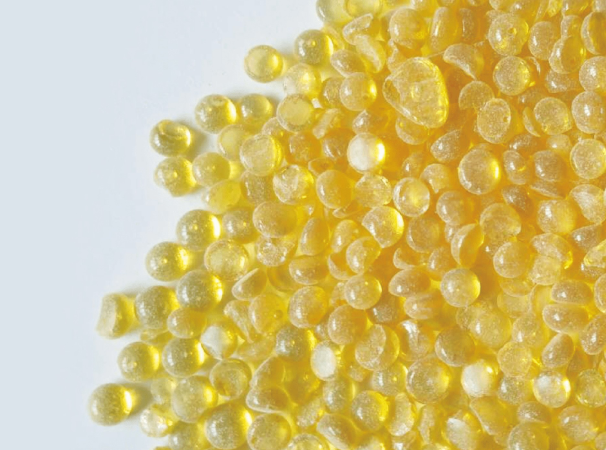
Lead: a blunt comparison that actually helps
Comparative insight, delivered with appropriate skepticism: commercial‑grade rosin glycerol ester saves your procurement team money today and gives your formulators headaches tomorrow. If you care about tack performance, shelf life, and predictable acidity, you’ll want the numbers—not marketing poetry—so we’ll look at acid value (mg KOH/g), volatility thresholds and how those metrics change glue behavior. For context, industrial adhesive labs commonly blend tackifying resin profiles with rosin esters to tune tack—see this tackifying resin example for how supply looks on the market. EEAT mode: technical‑practical guidance; real‑world anchor: the EU Green Deal’s push to reduce petrochemical content in adhesives, which is already nudging buyers toward bio alternatives.
Why acid value (mg KOH/g) is the stubborn metric
Acid value tells you how many milligrams of potassium hydroxide are required to neutralize one gram of sample. High acid value in rosin glycerol ester increases polarity, which improves initial tack to polar substrates but accelerates aging and can corrode sensitive components. Low acid value gives cleaner aging and better compatibility with polar polymers, but sometimes at the cost of cold tack. Think of it as a trade: immediate cling versus long life. Industry terms to keep handy here: acid value (mg KOH/g), rosin ester, glycerol ester.
Volatility thresholds and the real test: what TGA reveals
Volatility is measured with thermogravimetric analysis (TGA) under nitrogen at a controlled ramp—commonly 10 °C/min to 600 °C—to quantify mass loss and onset temperatures. Commercial grades often show a lower onset (earlier mass loss around 150–220 °C) because of lighter oligomers and residual solvents. High‑purity grades shift onset higher and shrink the 5–10% mass‑loss window, which means fewer odour and weight losses during hot melt processing. Molecular weight distribution and glass transition temperature (Tg) matter here; a narrow distribution gives reproducible softening and less bleed.
Head‑to‑head: what you get and what you give up
Short summary, cruel but useful:
– Commercial‑grade: lower cost, wider batch variability, higher acid value spread, earlier volatility onset. Good for large‑volume, low‑sensitivity applications like corrugated adhesives. – High‑purity: tighter specs, lower acid value (mg KOH/g), elevated volatility thresholds, cleaner aging. Preferred when optical clarity, corrosion resistance, or electronic assembly is required.
The practical implication: choose commercial if you’re cost‑driven and can QC each batch; choose high‑purity if product stability and regulatory compliance matter.
Operational production teardown — what engineers actually track
When you examine a production line, you monitor acid value drift across batches, TGA onset and 5% mass loss windows, and sensor readings on softening behavior during coating runs. Embed {main_keyword} and {variation_keyword} into the operational production teardown as part of your batch release checklist: acid value thresholds, volatility curve acceptance, and visual bleed criteria. — Do not skip correlating laboratory TGA curves with real‑world oven dwell times; otherwise you’ll learn the hard way how a sample behaves once scaled to a 200 kg kettle.
Common mistakes and practical alternatives
Common mistakes: trusting a single COA without in‑house spot checks, assuming identical behaviour across suppliers, and ignoring residual acidity when pairing with alkaline additives. Practical alternatives include blended tackifiers that pair a high‑purity rosin glycerol ester fraction with cost‑effective commercial fractions to balance price and performance. Also consider certified bio-based tackifier fractions where regulatory pressure or brand claims require lower petrochemical content—those often come with more consistent acid values and documented volatility profiles.
Advisory: three golden rules for selecting the right tackifier
1) Measure acid value (mg KOH/g) on every incoming lot and set acceptance bands ±0.2 mg KOH/g for critical products. 2) Require TGA reports with the heating profile (10 °C/min to 600 °C under N2) and accept only materials whose 5% mass‑loss onset meets your process temperature plus a 30 °C safety margin. 3) Match molecular weight distribution to your coating or melt window: narrow distributions yield predictable spread and less phase separation.
Final thought: these are not marketing niceties—these are the things that stop complaints and warranty claims. –
KOMO.