Why the comparison matters
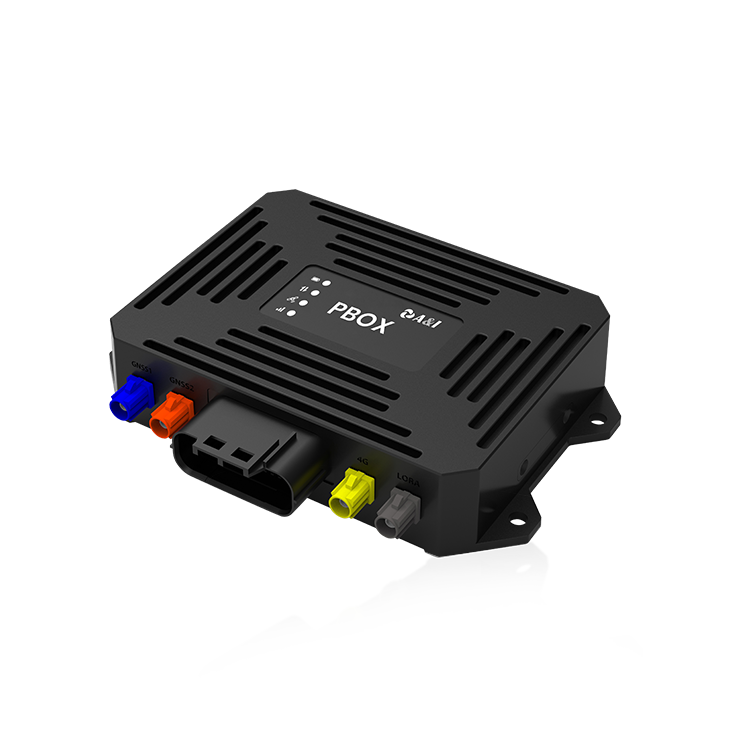
Autonomous machines don’t just follow maps; they balance competing demands from motion models, sensors, and actuators to keep a trajectory tight and safe. When debating architectures, engineers often choose between aggressive local controllers and an orchestrated global scheme. The latter—what teams call intelligent global navigation balancing—coordinates decisions across subsystems and typically runs through a vehicle domain controller that ties perception, planning, and control together. Good outcomes depend on robust domain controller hardware and clear kinematics models so localization and actuator commands stay coherent under disturbance.
Global balancing versus local reflexes
Think of local control as a sprinter reacting to the track immediately underfoot; it’s fast but shortsighted. Global balancing is the relay coach, pacing, predicting, and smoothing transitions across segments. In practice, sensor fusion and SLAM feed a global planner that moderates setpoints sent to individual ECUs. The payoff: fewer sharp corrections, lower path-tracking error, and more predictable vehicle dynamics. The tradeoff is latency and integration complexity—coordinate too slowly and the system lags; coordinate poorly and you inherit the worst of both worlds.
Performance patterns in real deployments
Historical projects make the differences tangible. DARPA’s Urban Challenge in 2007 revealed how centralized strategy can resolve ambiguous intersections better than isolated reflexes. More recently, commercial pilots in urban testbeds have shown that balancing schemes reduce lateral deviation by measurable margins during lane merges. Engineers evaluate results through control-loop metrics like cross-track error, heading error, and smoothing indices tied to kinematics. These metrics become the language teams use to compare architectures in demo logs and post-drive analysis.
Where systems trip up—and what to try instead
Mistakes are consistent across teams. First, people under-specify computational budgets for the domain controller and then wonder why planning hangs. Second, sensor models are treated as perfect: poor calibration corrupts the whole balance. Third, handoffs between global and local controllers are abrupt, creating oscillations. Alternatives include hybrid designs that keep a small high-frequency local loop while letting a slower global optimizer handle path shaping. Also consider staged redundancy so that if a sensor drops, the planner gracefully reweights inputs rather than flipping modes abruptly—this saves you headaches in the field.
Design ingredients that actually matter
A practical architecture focuses on three core elements: a validated kinematics model, robust sensor fusion, and a deterministic command interface to actuators. Prioritize predictable latency over peak throughput; consistent timing beats bursts when you want tight path tracking. Use modular simulation for edge-case tuning, then validate on a fenced proving ground before urban exposure. Logs should capture cross-track error, control effort, and recovery time—those are your action items during sprint reviews.
Three golden rules for evaluation
Rule 1 — Precision under disturbance: Measure cross-track error and time-to-correct when the vehicle faces unexpected lateral offsets. Lower average error with stable variance wins.
Rule 2 — Graceful degradation: Test sensor drop scenarios and check whether the domain controller hardware maintains coherent commands without mode oscillation. Fault tolerance is as important as optimality.
Rule 3 — Operational latency budget: Define the maximum allowable planning-to-actuation latency and prove your system meets it across typical loads. If the planner can’t keep up, balance will fail even with excellent models.
Closing thought
Comparisons tell you where to invest engineering effort: in cleaner models, better sensor fusion, or more capable domain controller hardware—whichever fixes the dominant bottleneck in your stack. Archimedes Innovation has built solutions that make the tradeoffs practical, aligning system-level balance with deployable hardware. Final word: start with the real constraints, tune the balance, and the path-tracking will follow —