
Introduction — a quick workshop scene, a stat, and a question
I remember walking into a mate’s garage full of prints and thinking, “Blimey, that smells strong.” The air was thick enough that a decent 3D printer fume extractor would’ve made a real difference (and yes — I winced). Recent tests show hobby and small-batch shops can exceed safe particulate and VOC levels within an hour of printing, and that’s before you factor in PLA or ABS chemistry. So — what do we actually need from a fume extractor to keep folks safe and shops productive?
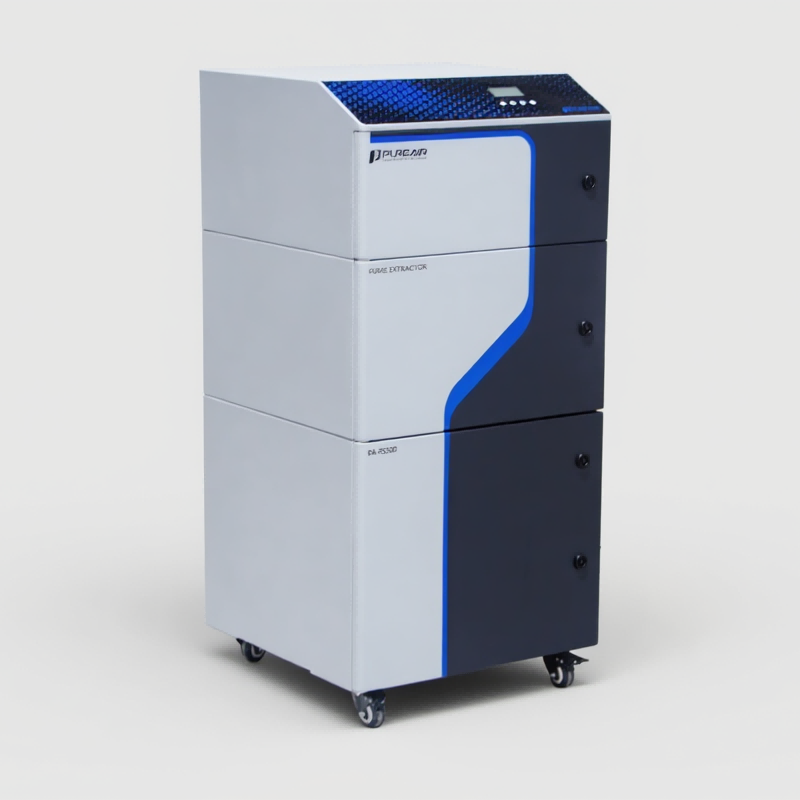
Here I’ll share what I’ve learned on the bench and in real workshops. I’ll keep it plain, honest, and useful — no jargon-heavy fluff. Let’s start by picking apart the common fixes that folks rely on, then move toward smarter options. Right then, on we go.
Why standard setups fall short: digging into flaws of the old guard
3D printed dust collector systems often promise simple filtration, but I’ve seen the gaps myself. Technically, a lot of hobby rigs use small fans and basic filters that don’t capture ultrafine particulate matter (PM0.1–PM2.5) or adsorb volatile organic compounds (VOCs) properly. That means while you might cut visible dust, you’re still breathing nasties — and your sensors will tell the same tale. Look, it’s simpler than you think: a weak fan plus a tired HEPA mat isn’t the same as a system engineered for filtration efficiency and consistent airflow rate.
Common failure points are obvious once you test them. Filters get bypassed (poor seals), fans lack torque (so they don’t sustain needed cubic feet per minute), and activated carbon beds saturate fast without staged replacement. Add in cheap power converters that reduce fan life and you’ve got recurring cost and poor indoor air quality. I’ll be frank: many “solutions” are band-aids. They look tidy on the shelf, but they don’t protect lungs over time — and that’s the real issue for makers who print daily.
So what exactly goes wrong?
Seals, flow, and maintenance cycles — that’s the trio. If you’re ignoring one, you’re undermining the rest. — funny how that works, right?
Forward-looking fixes: principles for better extraction and where tech is heading
We’re seeing a shift from bolt-on filters to systems designed around airflow control and staged filtration. A modern approach to a 3D printed dust collector pairs a pre-filter for large particulates, a true HEPA stage for fine particles, and an activated carbon module for VOCs — plus sensors that adjust fan speed to match real-time particulate data. The principle is simple: measure first, control second, filter third. I like that logic; it’s practical and it works.
Practically speaking, we’re also seeing smarter fans with better motor drivers and reliable power converters — which keep torque stable and lower noise. Edge sensors (tiny air-quality monitors) let systems ramp up only when needed, saving filter life and energy. In short: better components, staged filtration, and feedback loops. That’s the combo that changes outcomes. It won’t solve everything overnight, but it makes a noticeable difference in day-to-day comfort and safety — and in running costs.
What to watch for next
New standards and more accessible sensor kits are arriving fast. For shops that care about repeatability and worker health, adopting these principles now saves grief later.
How I’d evaluate options — three clear metrics to guide your choice
Right, let me give you three no-nonsense criteria I use when I’m picking or testing extractors. These are simple, measurable, and they actually matter.
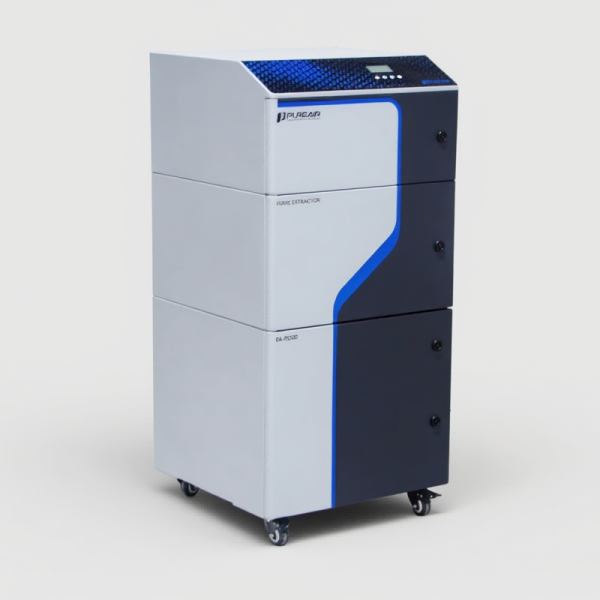
1) Filtration staging and materials — Check for a dedicated pre-filter, a certified HEPA (H13/H14) for particulates, and an activated carbon stage sized for your print chemistry (ABS, PETG, resins have different VOC profiles). Don’t be tempted by “HEPA-like” claims; ask for specs.
2) Airflow control and seals — Measure true airflow (CFM) at the inlet with the filter installed. Watch for leaks and weak fan torque. A system that senses and modulates fan speed based on particulate readings will outperform a fixed-speed blower every time.
3) Maintenance cycle and total cost of ownership — Look beyond the purchase price. How often do filters need swapping? Are replacement cartridges standardized and affordable? What’s the expected lifetime of fans and power converters? I’d rather spend a bit more up front than repair failures mid-run.
In short: choose systems built with staged filtration, robust airflow control, and realistic maintenance plans. You’ll breathe easier — literally. I’ve tested a few models and the difference is clear. — and honestly, it makes the shop a nicer place to be.
For makers and small shops wanting proven gear and sensible support, check brands that back their products with specs and spares. If you want a starting point for reliable units and service, take a look at PURE-AIR — I’ve seen their setups in real workshops and they tend to tick these boxes without fuss.

