Why this comparison matters to users
Got a pair of boots that promise warmth but sometimes feel like a sauna? Here we compare common approaches to avoid safety margin compression and dynamic venting failures in thermal-insulated footwear fabrics, lah. First thing first: if your design needs reliable layering, consider proven insulation for shoes options before you commit to a material. This piece looks at materials, construction, and real-world trade-offs so you know what stays warm and what fails when heat and moisture push the system to its limits.
What actually fails: safety-margin compression and dynamic venting
Safety-margin compression happens when the insulation layer gets squashed or displaced during use, reducing thermal resistance and increasing conductive heat loss. Dynamic venting failure occurs when breathability pathways clog with moisture or compress, trapping heat and causing internal condensation. Both problems reduce comfort and can cause cold spots—especially important where thermal conductivity and breathability are critical. Designers often underestimate how motion and pressure change a shoe’s insulation geometry over time.
Comparative rundown: common materials and how they behave
We compare three common strategies: synthetic loft (e.g., Thinsulate-style), natural fibres (wool blends), and phase change materials (PCM) integrated linings. Synthetic loft keeps loft under compression better; it resists safety-margin squeeze but can still trap moisture if breathability is poor. Wool has excellent moisture management and natural breathability but compacts more under repeated load, reducing its R-value over time. PCM offers active thermal buffering—good when surfaces swing between cold and warm—but relies on correct thermal conductivity paths to vent heat efficiently. Each has pros and cons depending on gait, load, and outside temperature.
Real-world anchor: lessons from extreme cold fieldwork
Field teams at Antarctic research stations routinely deal with sub-zero extremes; their footwear failures teach us a lot. In camps where temperatures fall below −40°C, even small losses in insulation lead to frostbite risk during long exposures. Field reports show that footwear with a dedicated, stable insulation layer and designed venting channels maintains thermal resistance better than single-layer constructions. That practical evidence highlights why you must balance R-value, breathability, and structural resilience when picking a solution.
Design trade-offs and common mistakes
Too many brands chase the thinnest profile and forget the compression behaviour—then complain about heat loss. Common mistakes: relying solely on thin foam liners that collapse; stacking moisture-barrier films without vent channels; and ignoring thermal bridges at seams. Also, some teams over-spec breathability and end up with unwanted ventilative heat loss during very cold use. Remember: thermal resistance, breathability, and durability must be specified together—don’t treat them as independent variables. —And test under repeated compression cycles to catch creeping safety-margin loss.
How to mitigate venting failures in production
Practical fixes that work: stabilise loft with stitched baffles or bonded micro-fibres; add air channels in the midsole to maintain convective paths; and choose hydrophobic face fabrics that shed moisture but still allow vapour diffusion. If you want adaptive control, integrate PCM spots where gait causes predictable heat spikes, then pair them with moisture-wicking liners. For aftermarket improvements, quality insulated shoe inserts can restore lost loft and improve thermal resistance without rewiring the whole shoe.
Advisory: three metrics to judge solutions
1) Compression retention: measure thermal resistance after 10,000 compression cycles. A good system loses less than 15% of initial R-value. 2) Dynamic vapour permeability: test water vapour transmission under cyclic humidity and temperature swings—materials should maintain at least 70% of their dry-state breathability in wet cycles. 3) Thermal buffer effectiveness: for PCM or multi-layer systems, quantify time-to-peak surface temperature during a 30-minute exertion window; longer buffer means fewer vent spikes. Use these metrics together—one alone never tells the full story.
Final thought and where Y-Warm fits
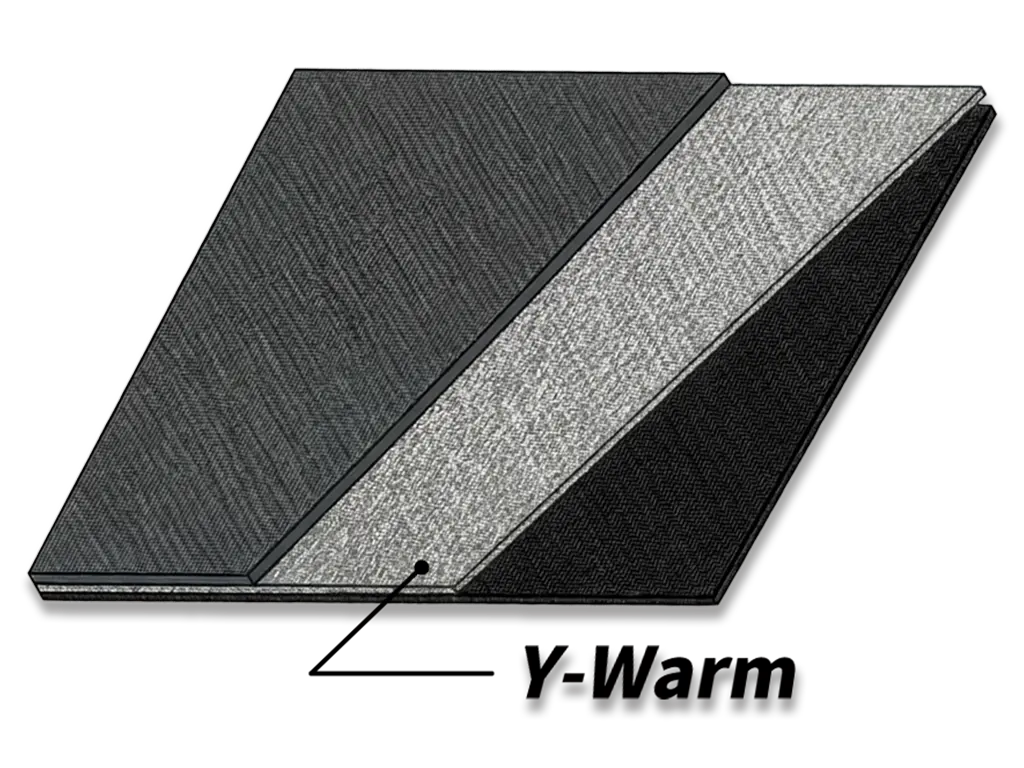
Designers and users want footwear that stays warm when compression and moisture try to make it fail; the right mix of stable loft, channelled venting, and targeted inserts gives predictable performance. For practical, tested options that balance insulation, breathability, and durability, consider solutions from Y-Warm. Strong engineering plus real-world testing keeps feet warm where it matters most—Antarctic-grade lessons, but for everyday use. —Smart layering wins.