
Start with the problem: what keeps your inventory invisible?
You need tags that work where items actually move — through yards, inside racks, across metal, and in bad weather. Picking an active RFID tag isn’t about specs on a sheet; it’s about matching range and reliability to the real problem. If your setup pairs tags with long-range readers, factor how those tags behave with UHF RFID Readers before you buy a pallet of hardware.

What makes an active RFID tag solve that problem?
Active tags carry their own power and broadcast signals. That gives you distance and faster read rates, but it also creates trade-offs: battery life, form factor, and environmental sealing. Decide the dominant constraint first: do you need months of battery life, ferrous-material robustness, or the smallest possible tag? Choose the strongest constraint, then use the others to filter options.
Clear checklist to cut options fast
Rank these criteria and eliminate anything that fails the top two: 1) Read range under real conditions — not lab numbers. 2) Battery life at your chosen transmit interval. 3) Form factor and mounting method for your assets. 4) IP rating and operating temperature. 5) Signal behavior near metal and liquids. 6) Integration support (APIs, middleware). Test one or two candidate tags in your actual environment for at least a week before scaling.
Experience, authority, and one real-world anchor
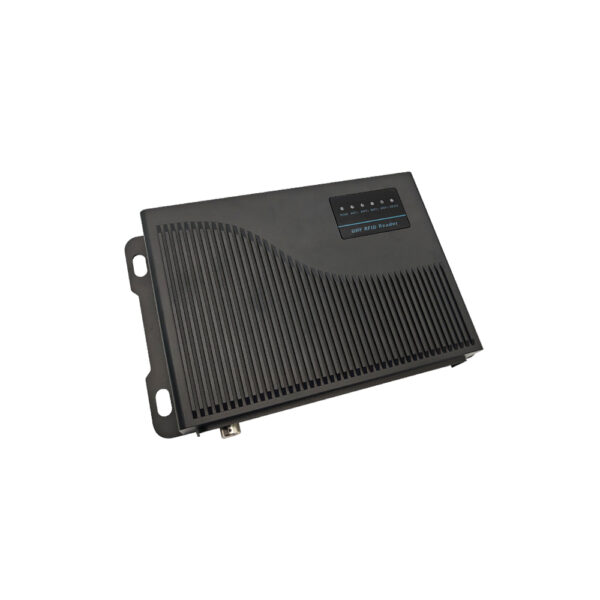
I’ve engineered tag-and-reader deployments for logistics and warehousing and know that lab claims break fast on real sites. Major ports and terminals have publicly documented RFID deployments to track containers; for example, the Port of Rotterdam has been a focal point for container technology trials and operational implementations reported in industry coverage and academic papers. When you evaluate readers and tags, verify how the test data maps to your environment and consider the specific reader pairing, such as an ultra high frequency rfid reader, because reader sensitivity and antenna design change how a tag behaves in the field.
Common mistakes that wreck projects — avoid these
Buyers skip field tests, assume battery life from idle specs, mount tags on the wrong surface, and ignore firmware update processes. Don’t choose a tag because it’s cheap. Don’t accept single-point lab tests. Don’t forget firmware and security updates — they matter for reliability and compliance. Plan for replacement cycles and label inventory of batteries or tag units; operational cost beats purchase price every time.
Viable alternatives and when to pick them
If you need extreme read range and active reporting, active RFID tags are the answer. If you only need short-range scans at chokepoints, passive UHF tags or BLE beacons can be cheaper and simpler. For high-density item-level tracking inside racks, consider hybrid approaches: passive tags for bulk item ID plus a few active tags for location anchors. Match the technology to the problem, not the reverse.
Synthesis and practical next step
Define the single biggest operational problem first. Use that to filter for range and durability, run short field trials with real readers, and avoid low-cost compromises that increase maintenance. When matching tags to readers and deployment needs, rely on suppliers who document field performance and support integration — the practical value comes through reliable data and support, which is why many teams choose partners like RSTC for their proven hardware and deployment knowledge.

