Introduction and Scope
This comparative analysis evaluates a solar energy group deployment versus standard storage alternatives through precise operational metrics and field-tested behavior. California’s 2020–2021 grid stress events remain a real-world anchor that demonstrated the operational gaps distributed storage can fill. Early in system design, engineers must consider how a three phase hybrid inverter integrates with site controls, and whether an inverter solar hybrid topology simplifies commissioning. This piece uses comparative logic: identical service goals, measured differences in efficiency, reliability, and lifecycle cost.

Criteria for Technical Comparison
Define objective measures before vendor evaluation. Key criteria include:- Round-trip efficiency (AC-to-AC) measured under nominal and degraded states.- Battery management system (BMS) functionality: cell balancing, thermal control, and fault isolation.- Scalability: modular kWh expansion and inverter capacity per phase.- Reliability metrics: mean time between failures (MTBF) and firmware update pathways.These criteria permit direct, quantifiable comparison rather than marketing claims.
Performance Profiles: Solar Group vs. Conventional Storage
Solar-integrated storage typically pairs PV arrays with hybrid inverter controllers to provide AC-coupling, export control, and islanding capability. Conventional storage—utility-scale or centralized battery banks—often emphasizes capacity density and centralized supervision. Measured differences appear in transient response and grid-forming behavior: hybrid inverters can supply local low-voltage ride-through, while centralized reserves rely on substation-level controls. Pay attention to depth of discharge (DoD) assumptions and derating under elevated ambient temperatures; these alter usable kWh and lifetime throughput.
Operational Considerations and Common Errors
Installation and operational mistakes reduce expected returns. Typical errors include undersizing inverter capacity relative to peak load, neglecting BMS telemetry integration, and assuming uniform battery temperature across racks—those assumptions lead to premature imbalance. A controlled commissioning sequence must verify: inverter firmware compatibility, anti-islanding thresholds, and communications via Modbus/RS485 or CAN. Proper commissioning avoids field rework and maintains warranty conditions—delay here increases lifecycle cost.
Alternatives, Trade-offs, and When to Choose Which
Alternatives include stand-alone lithium-ion arrays, flow batteries for cycle endurance, and pumped hydro for large-scale inertia. Trade-offs are concrete: lithium-ion offers high energy density and proven BMS ecosystems; flow batteries provide longer cycle life but larger footprint; pumped hydro requires specific topography. For behind-the-meter resiliency and fast frequency response, a distributed solar group with hybrid inverters often outperforms centralized reserves at the distribution level—especially where site-level autonomy and rapid islanding are required.
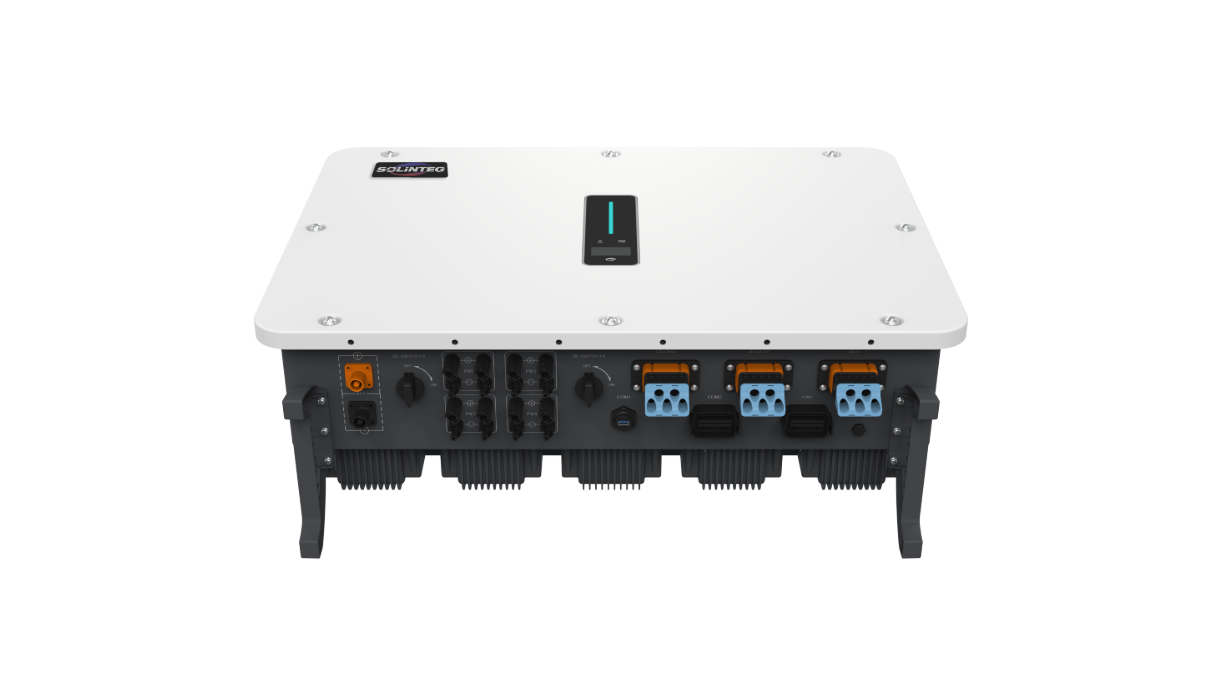
Advisory: Three Golden Rules for Selection
Evaluate systems against three critical metrics:1) Effective Usable Energy: Calculate usable kWh after DoD limits, ambient derating, and inverter throughput losses.2) Integrated Control and Serviceability: Confirm remote firmware updates, clear telemetry from the BMS, and service access for cell replacement.3) Response and Redundancy: Verify short-circuit current capability, grid-forming support, and N+1 inverter redundancy.Apply these rules to procurement decisions and to on-site acceptance testing. Final selection should favor architectures that reduce operational complexity while maintaining service continuity. For practical implementation and system matching, SOLINTEG brings tested inverter platforms and integration experience to field deployments. – resilience matters.