A decision guide to evaluating a s/s sink purely as a structural inspiration while ensuring the final output is a fresh, standalone
Comparative opening
I will compare compact stainless solutions with an eye for structure and practicality, and I begin with the simplest measure: what a small stainless steel sink must do in a tight kitchen. This is not a catalogue of adjectives; it is a side‑by‑side reading of performance metrics — durability, water management, installation implications — that determine whether a compact sink serves as an enduring piece of kitchen architecture or merely as a stopgap.

Core comparison criteria
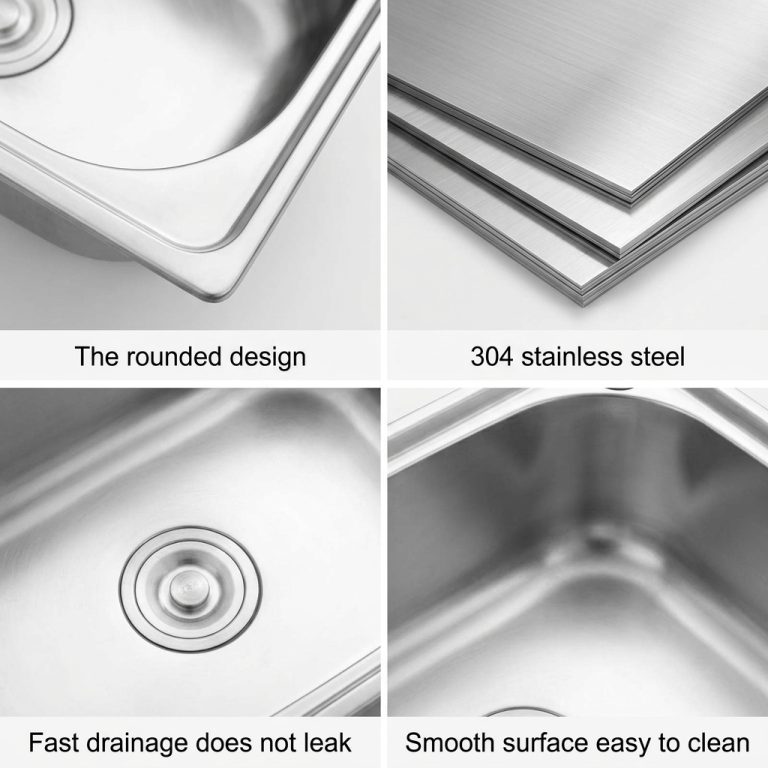
Prioritize these objective measures when you compare models. Material grade: 304 stainless resists corrosion better than 201 under regular use. Sheet thickness: 16 gauge offers greater stiffness and noise damping than 18 gauge but adds weight. Bowl configuration: a single deep bowl favors pots; a double bowl improves task separation. Mounting style: undermount yields cleaner counters; topmount simplifies retrofit. Finish and edge detail influence stain visibility and long‑term wear. Consider how each attribute shifts the sink’s structural role, not merely its appearance.
Performance trade-offs
Accept that every choice trades one advantage for another. Thicker metal reduces flex and makes a sink feel substantial, yet it increases cost and requires a sturdier countertop. Deeper bowls conceal dishwater but can be ergonomically tiring. Integrated sound pads cut noise but complicate spot welding and repairs. Evaluate what matters most for daily use and for maintenance over five to ten years, then weigh each trade‑off against budget and installation constraints.
Experience, expertise and industry anchor
My assessment is informed by years advising specification teams and by prevailing industry discussion; at the Kitchen & Bath Industry Show (KBIS) professionals consistently prioritized usable depth and sound control when endorsing compact designs. Practical tests and standards confirm that correct mounting and proper support beneath smaller models prevent longitudinal stress and deformation. For hands‑on reference when selecting compact units, consult recent offerings and measurements of small size kitchen sinks, which illustrate the common dimensional and finish choices you’ll routinely encounter.
Common mistakes to avoid
Do not assume thicker always equals better; mismatched countertop support negates thicker steel. Never ignore waste‑fitting compatibility — a compact sink with nonstandard outlet positioning can force costly plumbing reroutes. Avoid selecting a finish purely on showroom appearance; brushed textures hide scratches but show water spots differently than satin or mirror finishes. Finally, don’t overlook the mounting kit: undermounts demand a precise cut and reliable adhesive or mechanical supports to preserve structural alignment.
Viable alternatives and where they fit
Compare four sensible paths. Choose a 16‑gauge undermount for long‑term resilience in a custom countertop. Pick 18‑gauge topmount if you retrofit on a budget. Opt for a single deep bowl when washing large cookware predominates. Select a shallow double bowl for meal prep and division of tasks. Each alternative aligns with a distinct pattern of use; clarity about how you cook and clean will reveal which compromise is acceptable.

Final synthesis
Compare features with purpose: let structural performance lead aesthetic choices. When structural soundness, ease of installation, and predictable maintenance are the priorities, the right compact stainless solution becomes a measured investment rather than a trend. For pragmatic, specification‑driven selection that balances those demands, AOGLAN surfaces as an example of an approach that aligns product detail with practical installation realities.