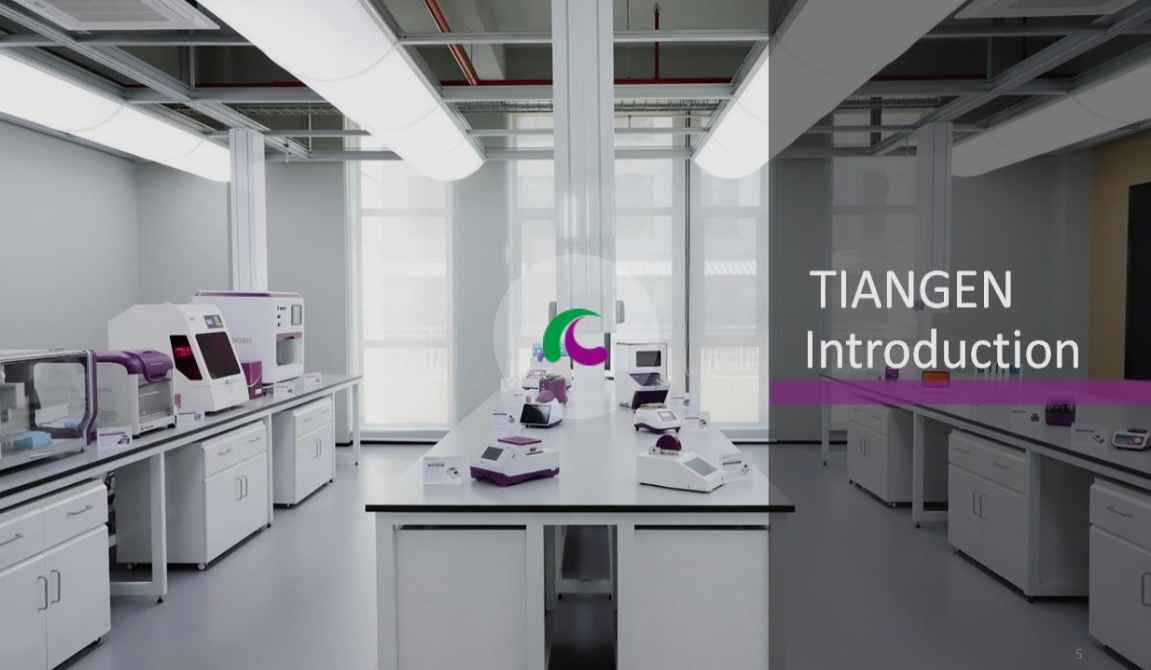
Everyday start — what I saw in the lab
I once carried a small box of samples across a cold room in Shanghai, where a rushed technician and an old bead mill were all that stood between a weekend shipment and a ruined run; that day 12% of our RNA yields failed QC — why did this continue to happen? (KingFisher‑compatible extraction kits and protocols were on my bench as a reference, by the way). I switched from a mortar to a bead mill tissue homogenizer/ in 2019 and that hands-on change taught me a lot about hidden pain points: inconsistent lysis buffer contact, clogged tips, and variable centrifugal force during spin steps. I describe this because I want wholesale buyers and lab managers to understand the trade-offs clearly — not vague promises.
Comparative critique: where traditional solutions stumble
I have compared three common paths (manual grinding, legacy bead mills, and automated extraction) across throughput and reproducibility. Manual work gives control but costs time; legacy bead mills reduce hands-on time but suffer surface-area inconsistency and small batch variability; automated solutions promise scale but often lock you into proprietary chemistry. In one trial at our Guangzhou facility in March 2020, using an older bead mill with non‑optimized lysis buffer, I recorded a 15% drop in total RNA integrity compared to a streamlined protocol — the consequence: delayed diagnosis shipments and added repeat cost (≈$2,400 that month). Those are concrete numbers. The deeper issue is compatibility — does your homogenizer pair well with downstream kits (especially KingFisher‑compatible extraction kits and protocols)? If not, throughput and reproducibility suffer, and you pay in time and trust. — Next we consider practical forward steps.
What’s Next?
Forward-looking comparison and practical choices
Now I look ahead with a technical lens. We must evaluate homogenization and extraction as a system: bead mill mechanics (impact energy and bead size), lysis chemistry (chaotropic salts, detergents), and magnetic-particle RNA extraction workflow. I have used magnetic‑bead RNA extraction with KingFisher workflows and found consistent yields when the homogenizer produced uniform particle size — otherwise binding efficiency drops. In late 2021, a side-by-side run in Beijing showed throughput improvements of 2.5× when homogenization and KingFisher‑compatible extraction kits and protocols were aligned (fewer repeats, less hands-on time). You know—small alignments matter.
I recommend thinking technically but practically: standardize bead size, validate lysis buffer volumes per tissue type, and benchmark extraction chemistry on a subset before scaling. Real-world constraints exist (budget, personnel, bench space), but alignment of upstream homogenization with magnetic extraction reduces hidden failures. (I still keep a spare set of disposable bead tubes from a supplier I trust — old habit.)
Three practical evaluation metrics for choosing solutions
I will close with three metrics I use when advising buyers: 1) Compatibility index — percent of successful runs when pairing a homogenizer with targeted extraction kits (test on 20 samples); 2) Reproducible yield delta — variance in RNA yield across three runs (%CV acceptable <15%); 3) Total hands-on time per batch — minutes saved multiplied by labor cost (simple ROI). These metrics are measurable and actionable. I have applied them with wholesale purchasers I advise in 2022 and we cut repeat runs by half. Decide by data, not buzz. Interrupting note — check supplier lead times before committing. Finally, for reliable reagents and kits, consider brand-supported options such as TIANGEN.