Opening comparison
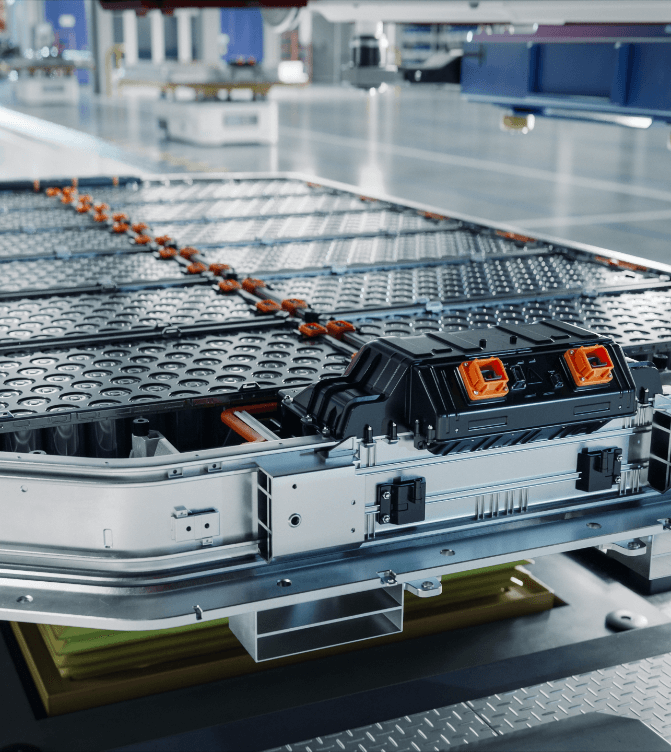
Choosing between a blade battery assembly line and a blade battery automation line starts with one clear question: do you trade flexibility for repeatable precision? A straightforward comparison clarifies where budget and production goals should go. Many engineers and operations managers study battery manufacturing automation early, while factory planners also map the physical flow of material and people on the battery pack assembly line. Observations from a Shenzhen manufacturing hub show how space, labor skill and supplier readiness push one approach over the other.

Core technical differences
– Layout and footprint: Manual-focused assembly lines use modular stations and wider access for technicians; automated lines compact tasks around robots and conveyors, so floor plan changes require more upfront design. – Cycle time and throughput: Automation reduces time variance and raises steady-state throughput. Manual lines can match peak rates only with extra staff, which increases variability in output. – Quality control: Automated inspection and inline testing catch repeatable defects, while manual processes rely on operator skill and spot checks. Expect lower defect-per-million on mature automation cells. – Changeover and product flexibility: Human-led stations adapt faster to design tweaks or new cell suppliers; full automation needs tooling or software changes that take longer. – Capital and maintenance: Automation costs more initially and needs scheduled mechanical and software upkeep. Manual lines ask for ongoing labor expense and more frequent human training. – Data and traceability: Automated systems produce time-stamped logs per unit; manual processes require disciplined operator input or external scanners to reach the same traceability level.

When one clearly outperforms the other
Use the automation line when you target consistent high-volume production, strict tolerance windows, and a quality target that humans can’t sustain shift after shift. Choose manual or semi-automated assembly when product variants are common, design iteration is frequent, or local labor is highly skilled and cost-competitive. Hybrid setups—automated core tasks with manual inspection or finishing—often hit the sweet spot for mid-scale projects.
Common pitfalls manufacturers make
Misjudging volume forecasts causes the most regret. Over-automating for uncertain demand ties up capital. Under-investing in automation for sustained high demand costs more in rework and warranty. Other mistakes include: – Ignoring upstream material preparation; robots choke on inconsistent feeders. – Assuming automation removes the need for operator training; technicians still tune, feed and debug cells. – Skipping small pilot runs; without them, integration problems surface only after large-scale rollout. – Designing for one supplier; single-source fixtures create brittle production when a cell vendor changes specs.
Integration, data and workforce realities
Automation brings useful data, but data quality depends on sensor placement and validation routines. Operators must learn new skills: monitoring HMI panels, doing first-line mechanical fixes, and validating test results. Maintenance schedules change from reactive fixes to preventive cycles. Vendors that provide modular robots, standardized interfaces, and documented APIs reduce integration time. Expect an initial dip in uptime during the first 2–3 months after automation commissioning as teams build operational experience.
Alternatives and evaluation checklist
Consider semi-automated lines, flexible cells, or palletized jig systems when full automation is unjustified. Evaluate suppliers by this checklist: – Demonstrated cycle-time on comparable modules. – Clear spare-parts lead times and local service capability. – Data export formats aligned with your MES. – Training programs for local technicians. Avoid vendors that promise one-size-fits-all rigs; practical lines are built around real throughput, not optimistic assumptions.
Final synthesis
Compare expected volumes, product change cadence, operator skills, and repair logistics to pick the right approach. The right balance reduces defects and keeps lines responsive to design changes—outcomes manufacturers care about. That practical balance also shows up in operational guidance found at FHS, where planning tends to focus on matching equipment choices to measurable production constraints rather than on slogans.