Introduction
Great parties are engineered, not improvised. A DJ laser light can turn a quiet floor into a sea of movement in seconds. Picture a rooftop show as the bass drops and a thin mist hangs in the air; the crowd expects crisp beams that cut through haze without glare. Field surveys often show that more than half of small venues cap haze output and power draw, while many rentals still run middling scan rates. So why do some rigs feel sharp and musical, while others look noisy or harsh? The difference lies in small technical choices — beam divergence, scan rate, safety interlock thresholds — and how they stack up under real room conditions (monsoon nights, power dips, last-minute layout changes).
We will compare what actually matters, rather than what looks flashy on a spec sheet. Then we will dive under the hood to find the hidden gaps that trip up even careful planners. Right, shall we move from promise to practice?
Part 1: Hidden Pain Points with Real-World Party Setups
Where do users feel the pinch?
When people book party lighting lasers, they expect clean patterns, steady lines, and safe, bright colour. Look, it’s simpler than you think: the room, the controller, and the optics must play together. In practice, tight schedules and mixed gear cause friction. A controller locked to basic DMX512 steps can make smooth shapes stutter. Low scan rate on older galvanometers blurs text at wider angles. If the beam divergence is high, aerial effects look fat instead of sharp. And venues often throttle haze to keep sightlines, which exposes any alignment issues fast — funny how that works, right?
There is more. Power converters in portable racks can add noise; you hear it and sometimes see it as micro flicker. Safety interlock settings get too conservative for short throw distances, so cues fail on stage even though they looked fine at rehearsal. Meanwhile, the ILDA protocol mapping is tidy on paper but drifts if cables or adapters are cheap. Users blame “the laser,” but the fault is often in the chain: optics, controllers, scan rate, and cabling under a capricious power feed. The pain is real because most flaws only appear under live load.
Part 2: Comparative Insight — Why Some Rigs Work Better
What’s Next
Let us shift to principles that raise the floor. New drivers now modulate galvanometers with smarter current curves, keeping effective scan rate stable at wider angles. That helps text and logos stay legible even at 8–12 degrees. Closed-loop temperature control holds colour balance as diodes warm, so greens do not swamp reds mid-set. Better optics reduce beam divergence, which makes aerial fans look surgical. And hybrid control stacks accept DMX512 for quick cues while falling back to ILDA or Art-Net for smooth vector work. If you prefer reliability over showmanship, this is your friend — consistency first, flash later.
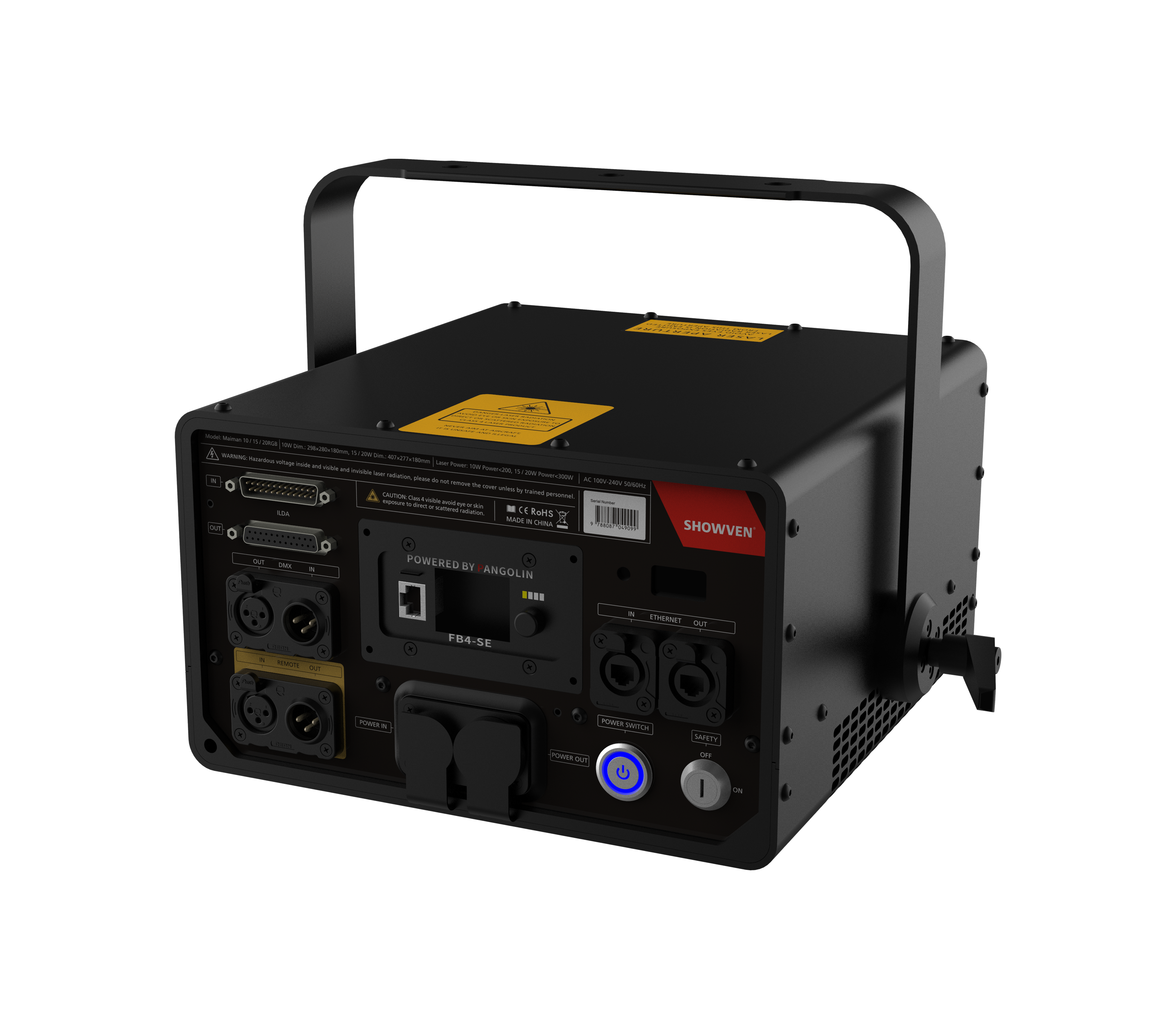
The next layer is orchestration. Some fixtures run small edge computing nodes to pre-smooth cue data before output. That lowers jitter when the DJ fires rapid scene changes. Robust power converters keep the rails steady when the venue’s supply sags. IP-rated housings guard against mist or dust, useful for beach or monsoon gigs. When you pick party laser lights built on these ideas, you reduce three risks at once: ugly flicker, safety lockouts at the wrong time, and colour drift across a long set. Different rooms, same output. That is the comparative edge.
Before we close, three clear metrics help you choose well: 1) Confirm scan rate at your projection angle, not just the headline kpps figure; 2) Check beam divergence and colour stability over a 30–60 minute duty cycle at 35°C ambient; 3) Verify control compatibility and latency across DMX512, Art-Net, and ILDA, plus emergency-stop behaviour. With these, you can judge trade-offs in minutes, not months. For deeper technical documentation and product families, see Showven Laser.