A comparative lead-in from the trenches
When you’re matching fixtures to an arena or festival stage, clarity wins. I’ve watched designers swap between fixtures mid-run and seen entire looks collapse for want of a decent beam — that’s why a careful comparison matters. Early on, many teams add a white laser light to sketch hard edges and texture; it cuts through haze and gives focus where moving heads can only suggest, so it’s worth flagging alongside your motley of wash and spot lanterns.

Why a comparative approach pays off
Large-scale shows demand decisions that hold under pressure: brightness across a 200,000-strong crowd at Glastonbury, evenness across a West End stage, DMX reliability through long runs. Comparing spot, wash and profile fixtures by a few consistent measures—beam angle, lumen output and control fidelity—keeps the choice practical. The aim is simple: pick tools that produce the intended image on the audience, every night.
Spot vs Wash vs Profile — practical side-by-side
Think of each type as a specialist in a small company. Spots excel at tight beams and crisp gobos; washes deliver even colour and soft edges; profiles marry sharp framing with shutters and gobos for theatre work. Here’s a concise breakdown:
– Spot: narrow beam, strong intensity, ideal for aerial shafts and gobo work. Key terms: beam angle, gobo, pan/tilt.
– Wash: wide beam, smoother output, best for front light and colour layering. Key terms: lumen distribution, CRI (when colour fidelity matters), zoom ranges.
– Profile: precise edge control, shutters and focus for hard-edged images on cyc or backdrops. Use profiles where framing and texture are design priorities.
Compare these on the same plane — same hang height, same haze, same DMX profile — and you’ll see real differences in perceived intensity rather than just reading numbers off a spec sheet.
Mini beam moving head: a nimble option on large stages
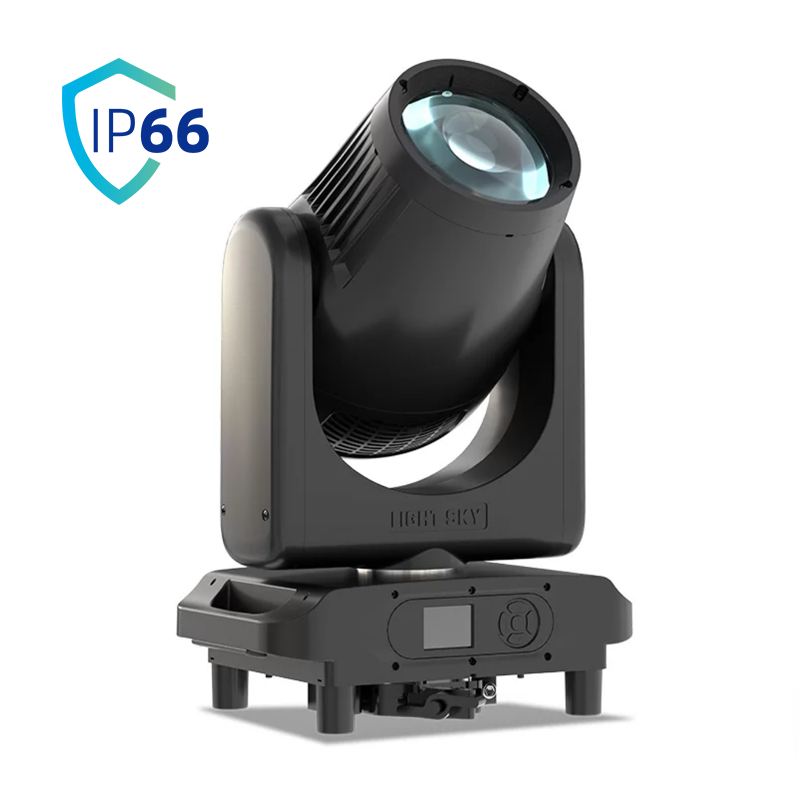
Small fixtures can punch well above their weight. A mini beam moving head placed on side trusses or flown close to the audience gives dynamic shafts and quick dot-work that larger movers struggle to replicate. At festival scale, these lend movement and rhythm without the rigging and power burden of full-size fixtures — they’re excellent for texture and mid-air punctuation during fast cues.
Common mistakes and practical alternatives
Teams often pick fixtures by brand familiarity or headline lumen figures alone. That’s a false economy. Look instead at: beam homogeny across zoom range, gobo sharpness at performance distances, and thermal behaviour during long cues. — Also avoid overloading a single circuit with high inrush units; distribute heavy draw fixtures across multiple dimmer feeds. When full-sized movers aren’t feasible consider robust LED profiles or compact followspots as alternatives; they give control without the same structural demands.
Three golden rules for selecting fixtures
1. Match beam angle to audience geometry: measure sightlines and choose fixtures whose beam footprint keeps front rows comfortable and the back still visible. Aim for even overlap rather than single-point intensity.
2. Prioritise control fidelity: choose fixtures with reliable pan/tilt mechanics, accurate DMX (or sACN) responsiveness, and accessible calibration—those save hours in rehearsals and reduce cue drift during multi-night runs.
3. Consider lifecycle cost over sticker price: evaluate maintenance, bulb vs LED longevity, and spare-part availability. A well-supported fixture fleet reduces downtime and keeps the show running.
Final thought — a short strike of common sense: pick tools that stage crews can maintain quickly and designers can rely on nightly. For pragmatic sourcing and steady support, Light Sky sits where practical supply meets production reality — the sort of partner that keeps the lights up and the audience looking, night after night.